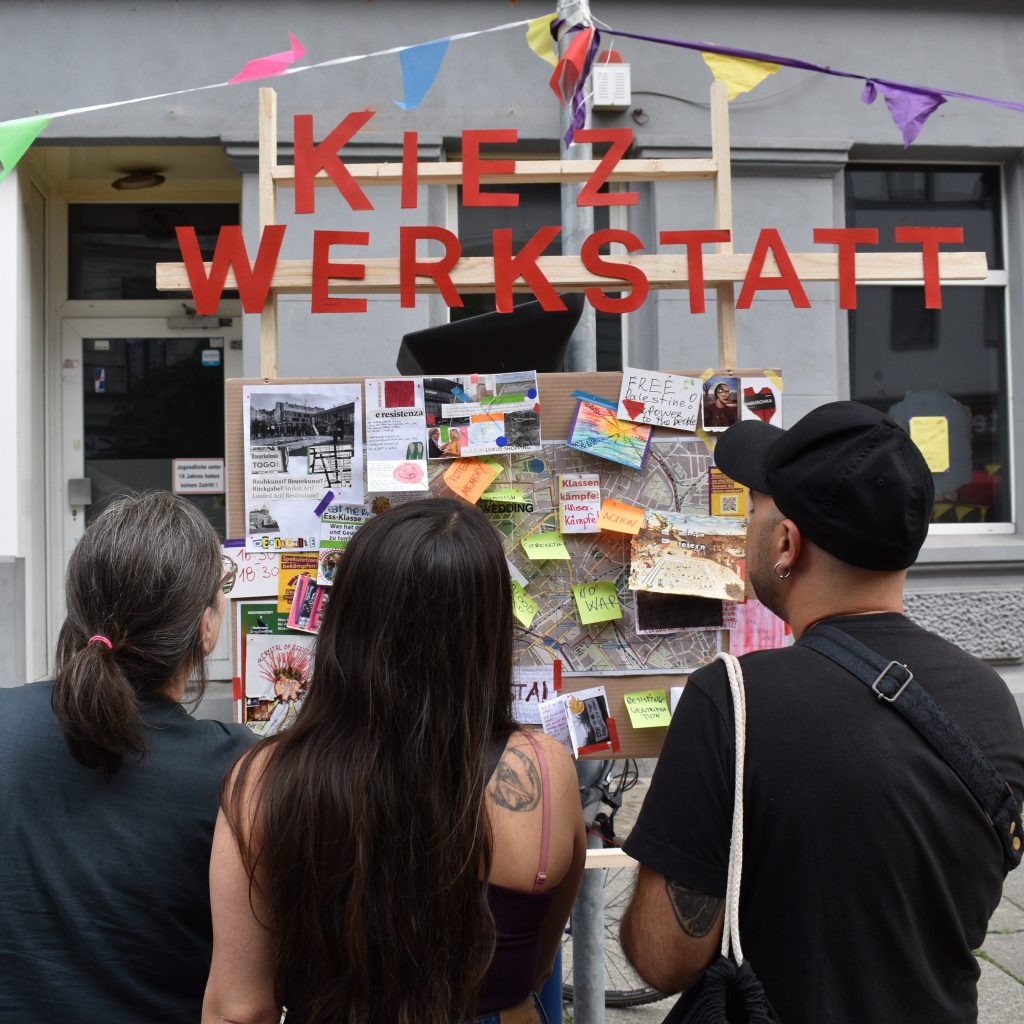
Archive / Actions — 5 July 2025
This was our first action: a Straßenfest in our own neighborhood, and the first time an idea we’d only talked about became something other people could actually walk into.
where this started
We started our project by circling theory: how do we move culture away from the museum? How do we turn passive looking, passive learning, into something that activates making? How do we let someone’s own voice carry the same weight as “the greats” – the thinkers, artists, experts behind glass?
Then a Straßenfest in the neighborhood opened a call for contributions, and joining it gave us a concrete occasion to test what had, until then, only existed as questions. We came up with a topic, resistance in Wedding, and with it, a way to explore the connection between past memory and present everyday life: the feelings, perceptions, and small moments that don’t usually make it into anyone’s official account of a place.
Standing in front of an actual event to plan, the questions changed shape. They collapsed into something sharper: how do we start a conversation people actually want to be part of, and clear the obstacles out of the way of that happening?
what it had to do
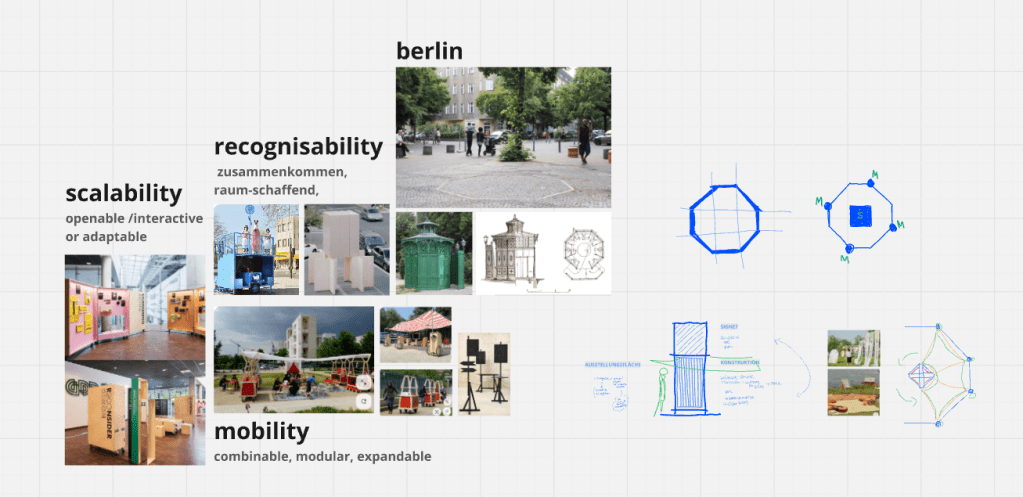
Before we built anything, we mapped out what a space of action for this practice would even need to hold: recognisable, wherever it turned up. Scalable, open, interactive, adaptable and modular. We also sketched various versions of a heavier, grounded alternative and set it aside; the practice needed to travel, not root itself – and we needed something efficient, rather than heavily designed, something raw.
From those criteria, the brief got concrete. It had to go up anywhere, with no fixed site to rely on. It had to come down again just as easily, fold away, survive being reused across actions we hadn’t planned yet. It needed a surface, somewhere to hold both the process and whatever came out of it, together. And since we imagined this living across scattered public spaces rather than one address, it needed to be recognizable wherever it landed.
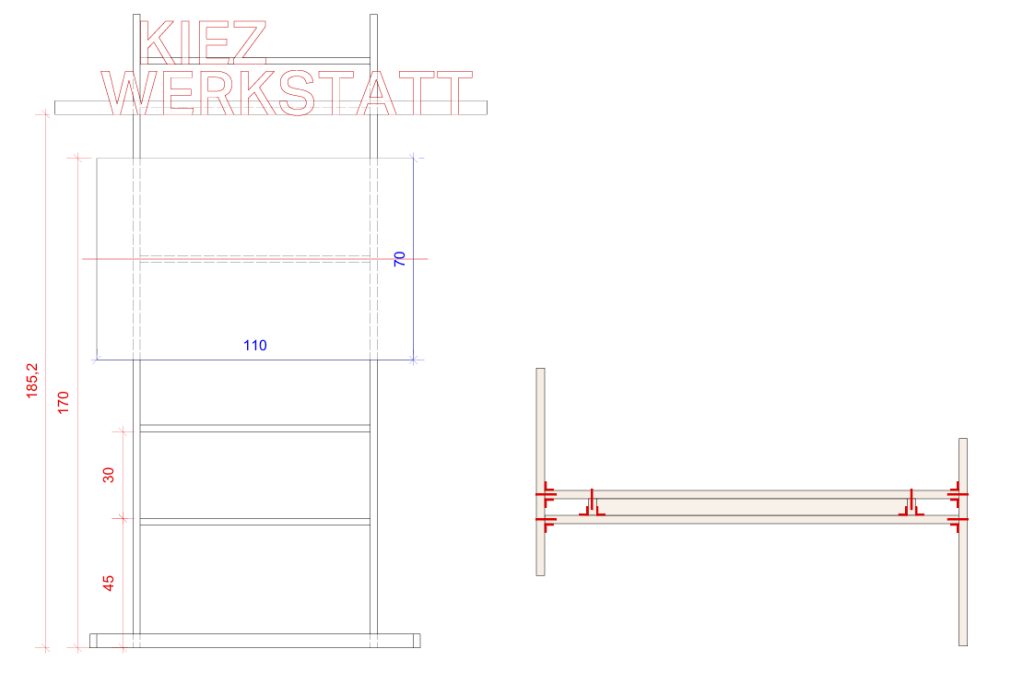
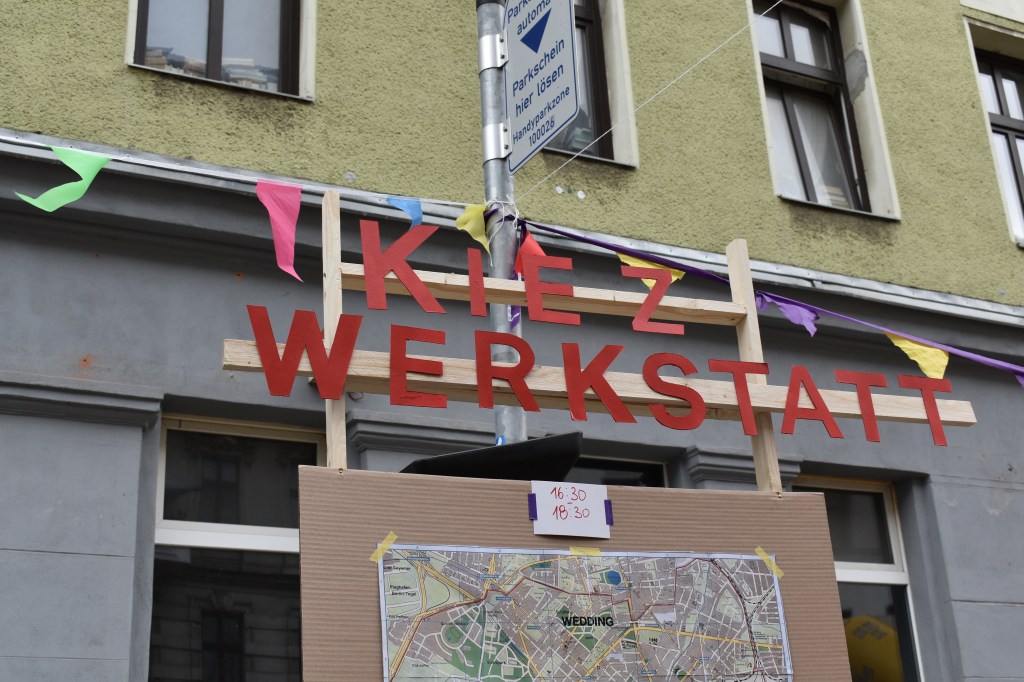
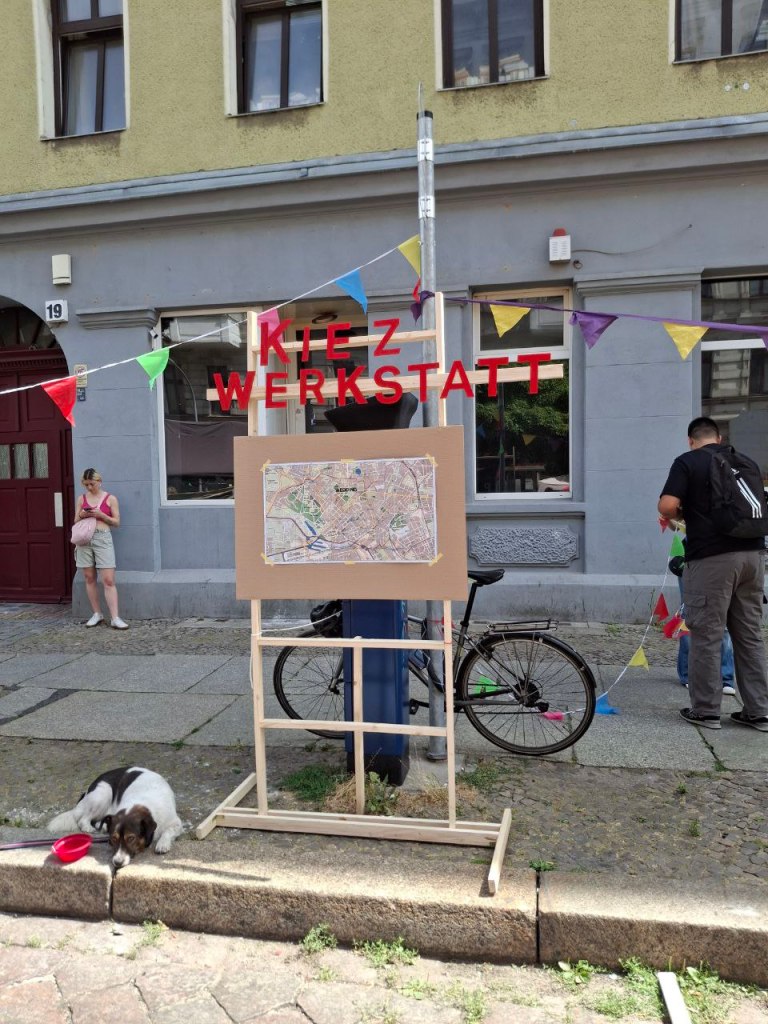
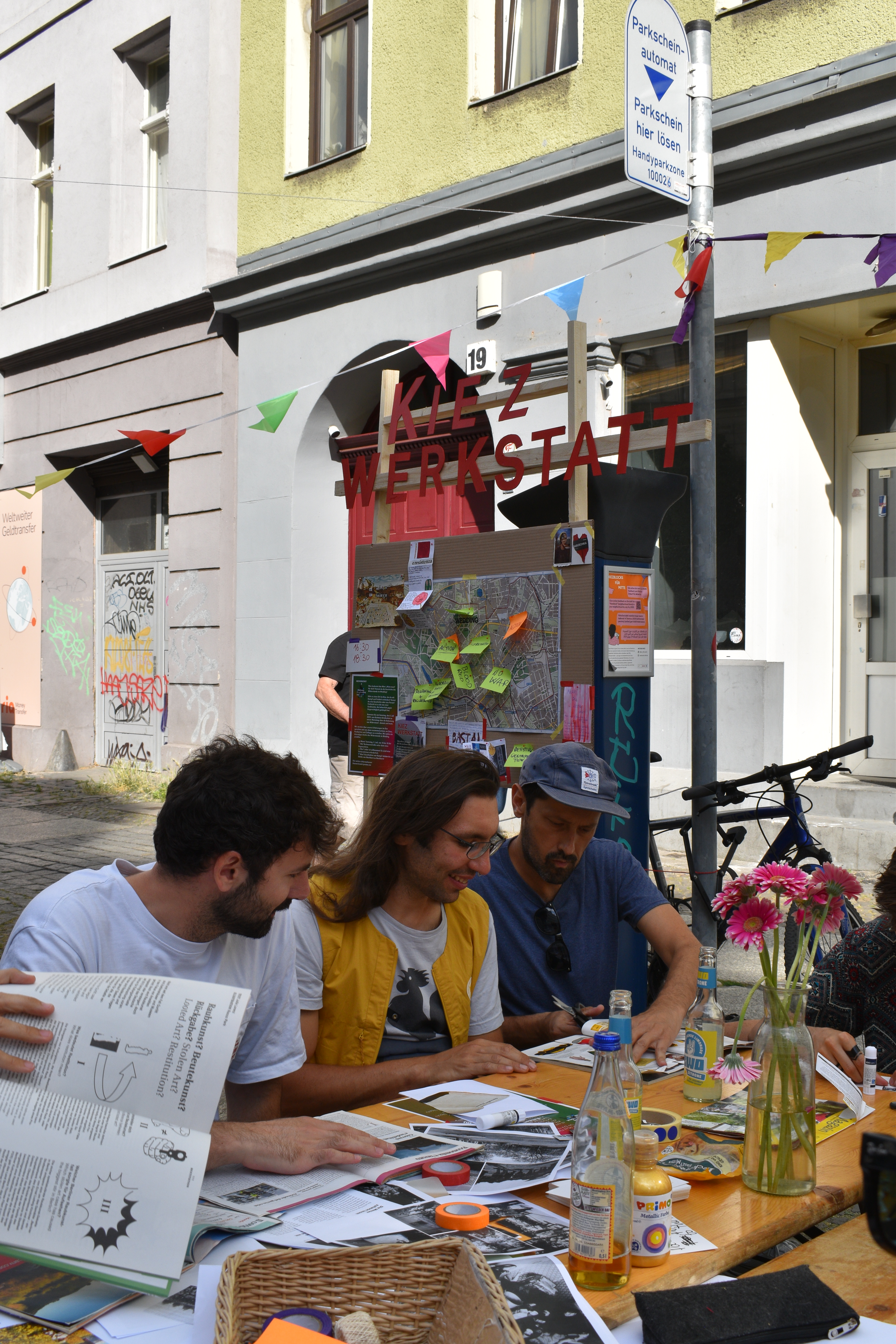
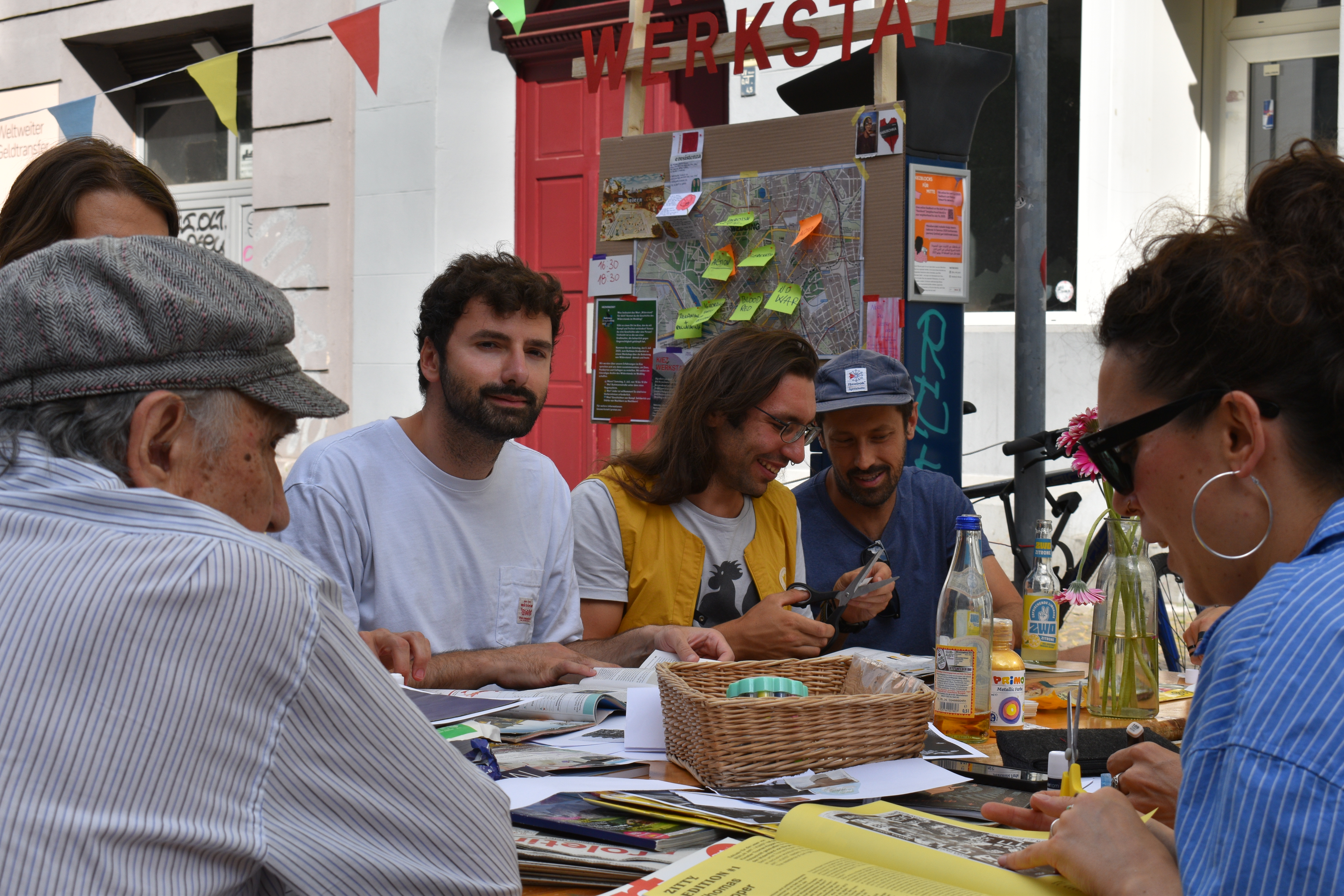
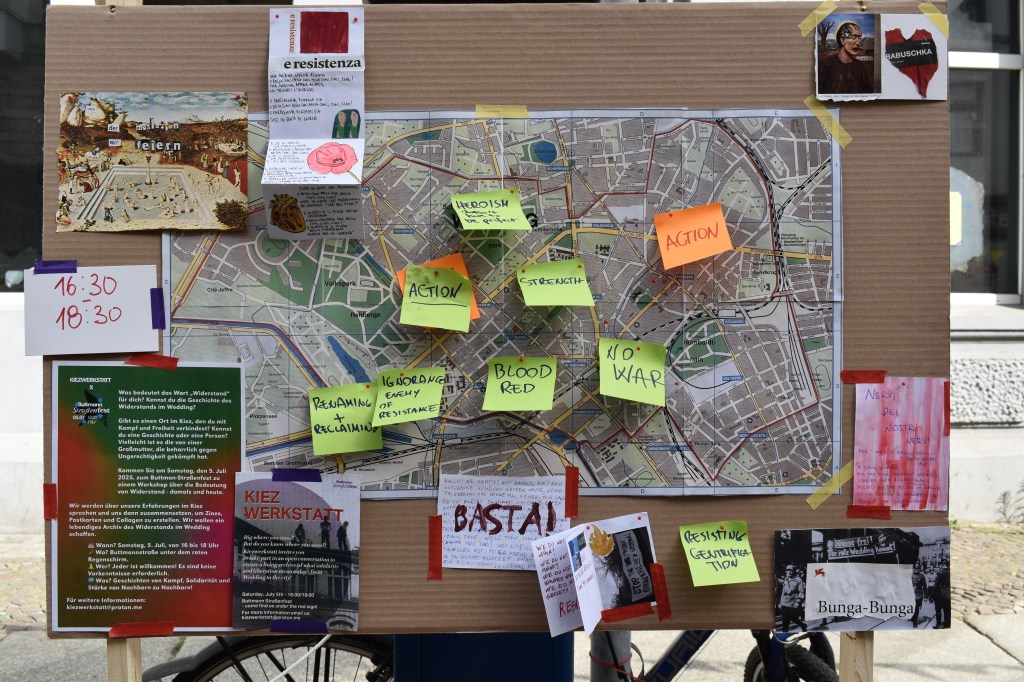
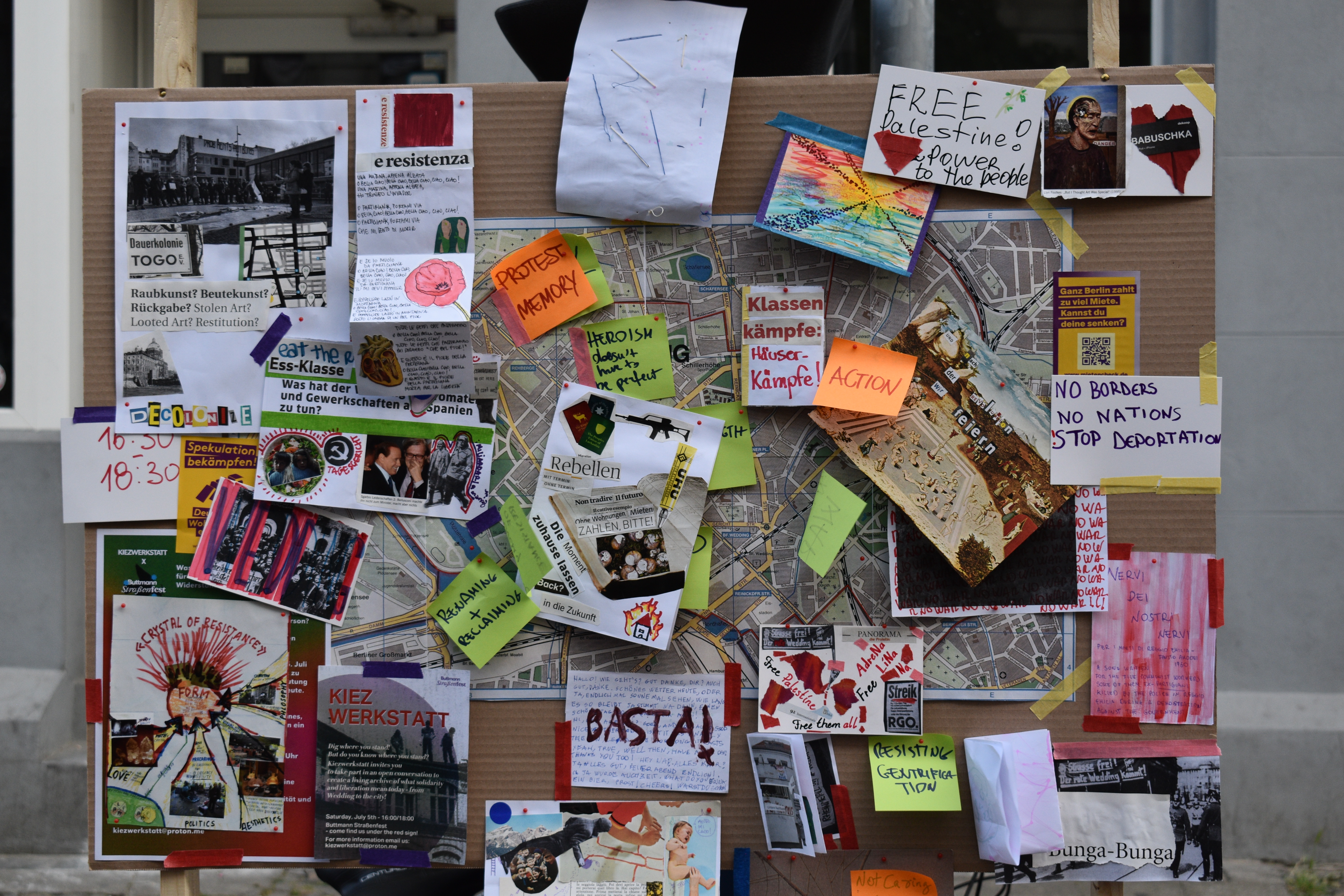
That’s how we arrived at the board. Freestanding, light enough to carry alone, quick to assemble and just as quick to pack away. Our name sits on it in red: big enough to read from across a busy street festival, small enough to still feel handmade.1
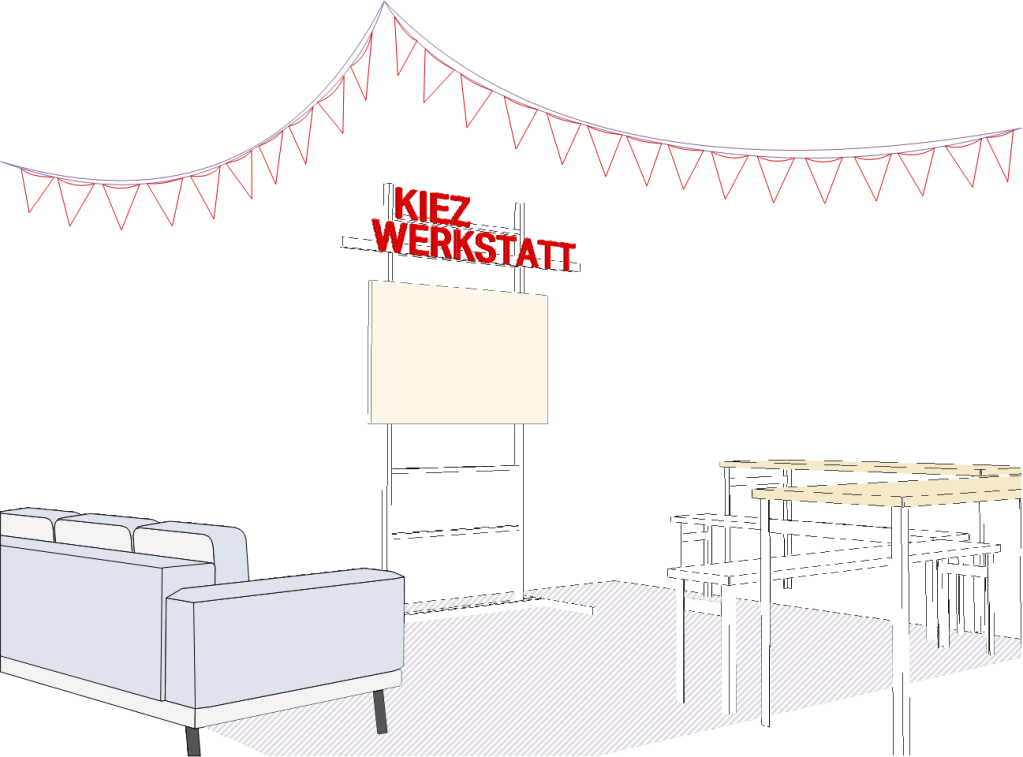
the room we built around it
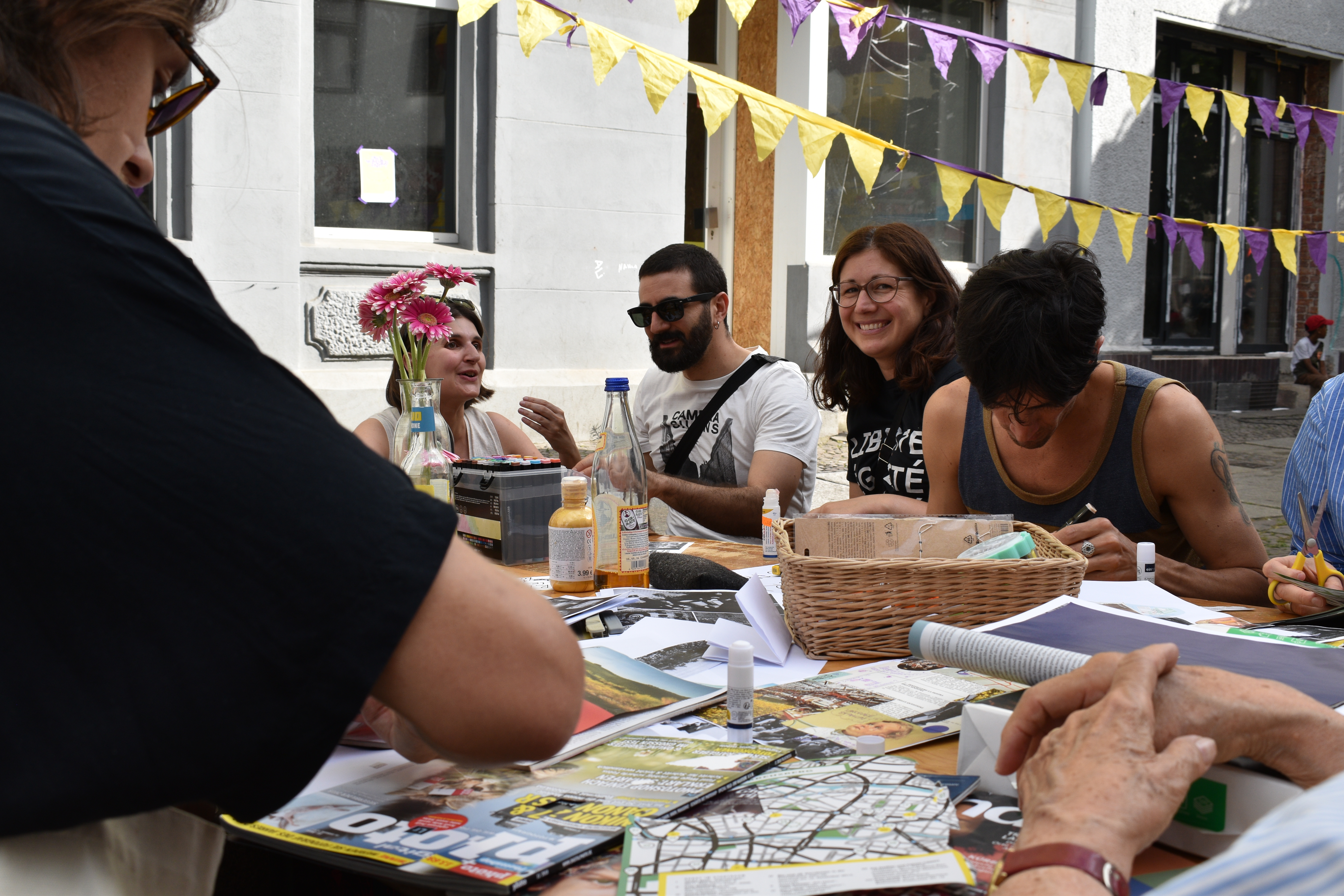
We decided to set our space as a living room around the board: a carpet, a sofa, chairs, cushions, a coffee table with drinks. Less a stand, more somewhere you’d actually want to sit down, a small pocket of slowness inside the noise of a street festival, close enough to the crowd to be found, calm enough to invite someone to stop moving.
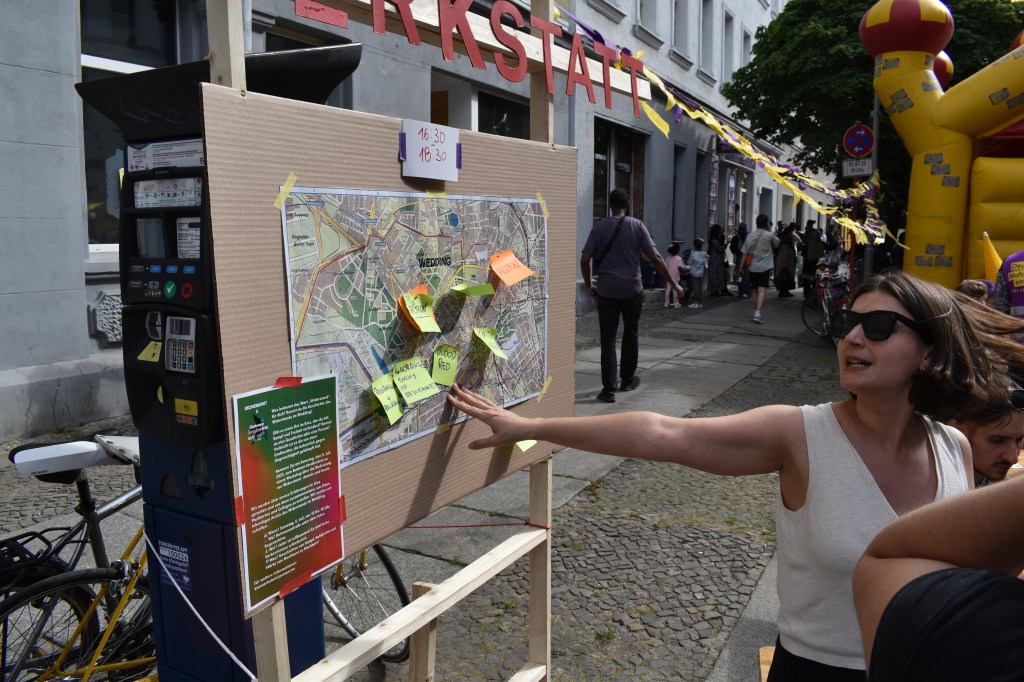
Together with a printed neighborhood map, the board and the room around it became the center of gravity for the day: a place where a personal memory could become something shared and visible, without anyone needing to perform it in front of a group.
what we leaned on, what we risked
The question we’d already landed on became the goal we set for the day’s structure ourselves: how do you make joining a conversation easy, low-stakes, without obstacles in the way?
That meant no formal invitation to speak, no single moment where everyone had to perform for the group. Instead, the day split into two moments that could be entered at any point: the map, where a story became a shared mark rather than a spotlight; then a making station, where the curated material could turn into something made with your hands instead of said out loud. Neither part asked for commitment upfront. You could sit, watch, add one pin, or spend an hour building a zine, the structure held all of those as equally valid ways in.
our plan for the day
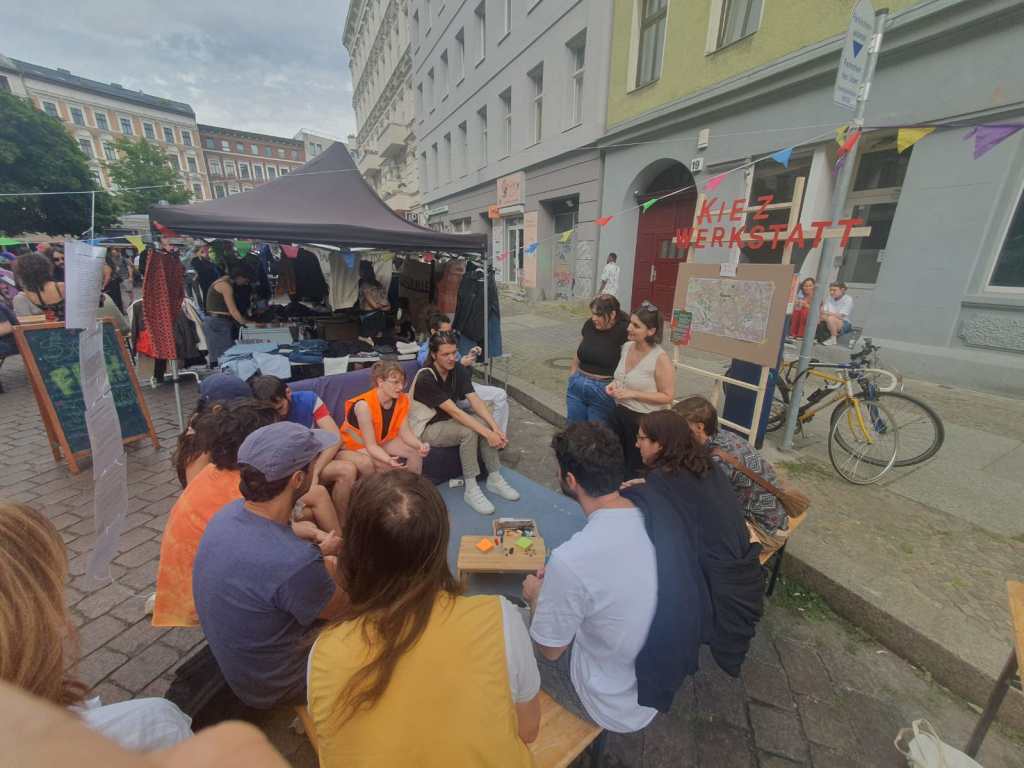
The day itself was planned in two parts. First, the map: people gathered around it and talked about places connected to resistance in and around Wedding — open, too, to other Kieze, as comparison or just as another story set beside it. We opened with our own examples, then let the floor take over2; as someone shared something, we pinned a red pin onto the map together, and afterwards found one word as a group to sit beside it, turning a private memory into something the whole group had touched, without asking anyone to explain more than they wanted to.
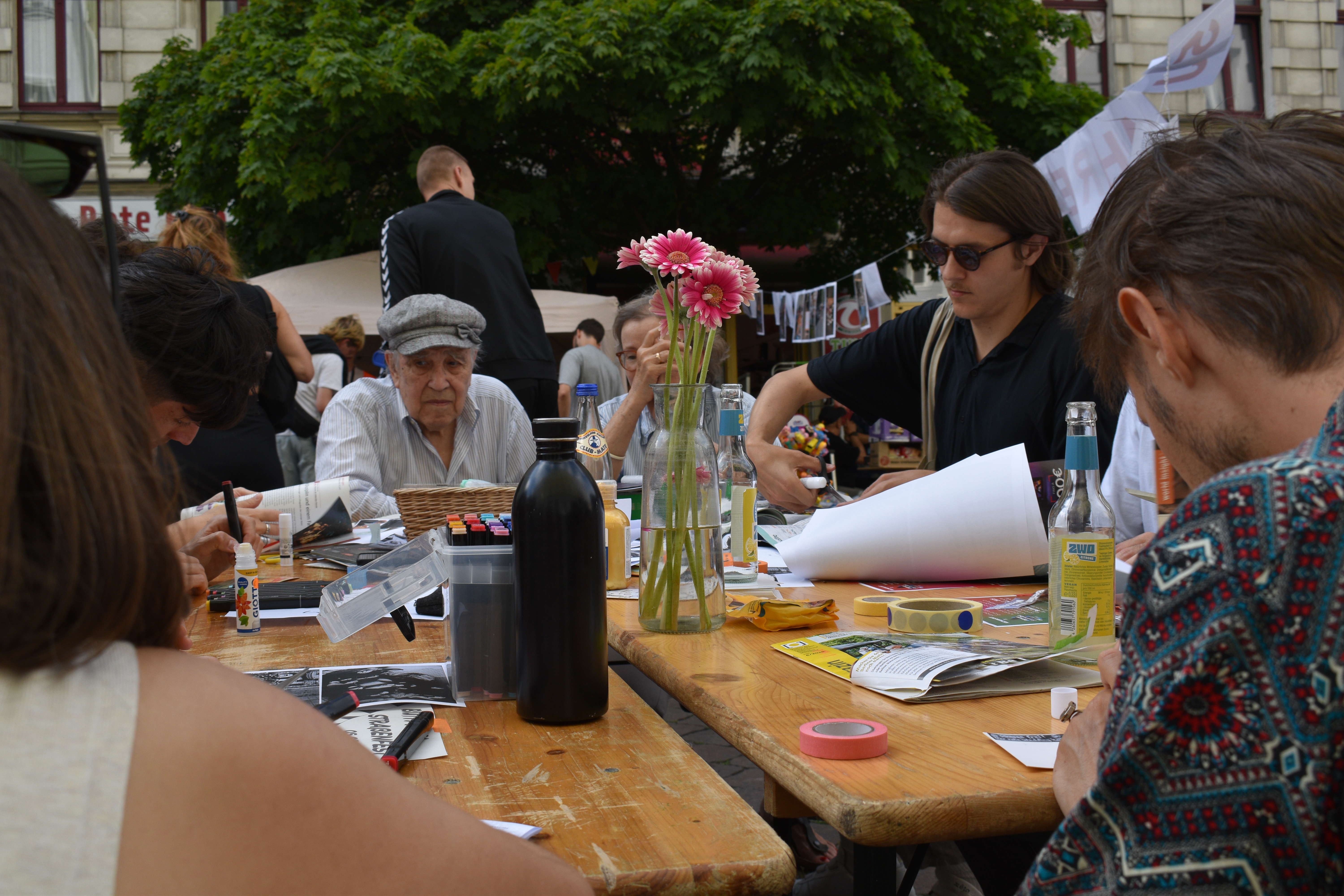
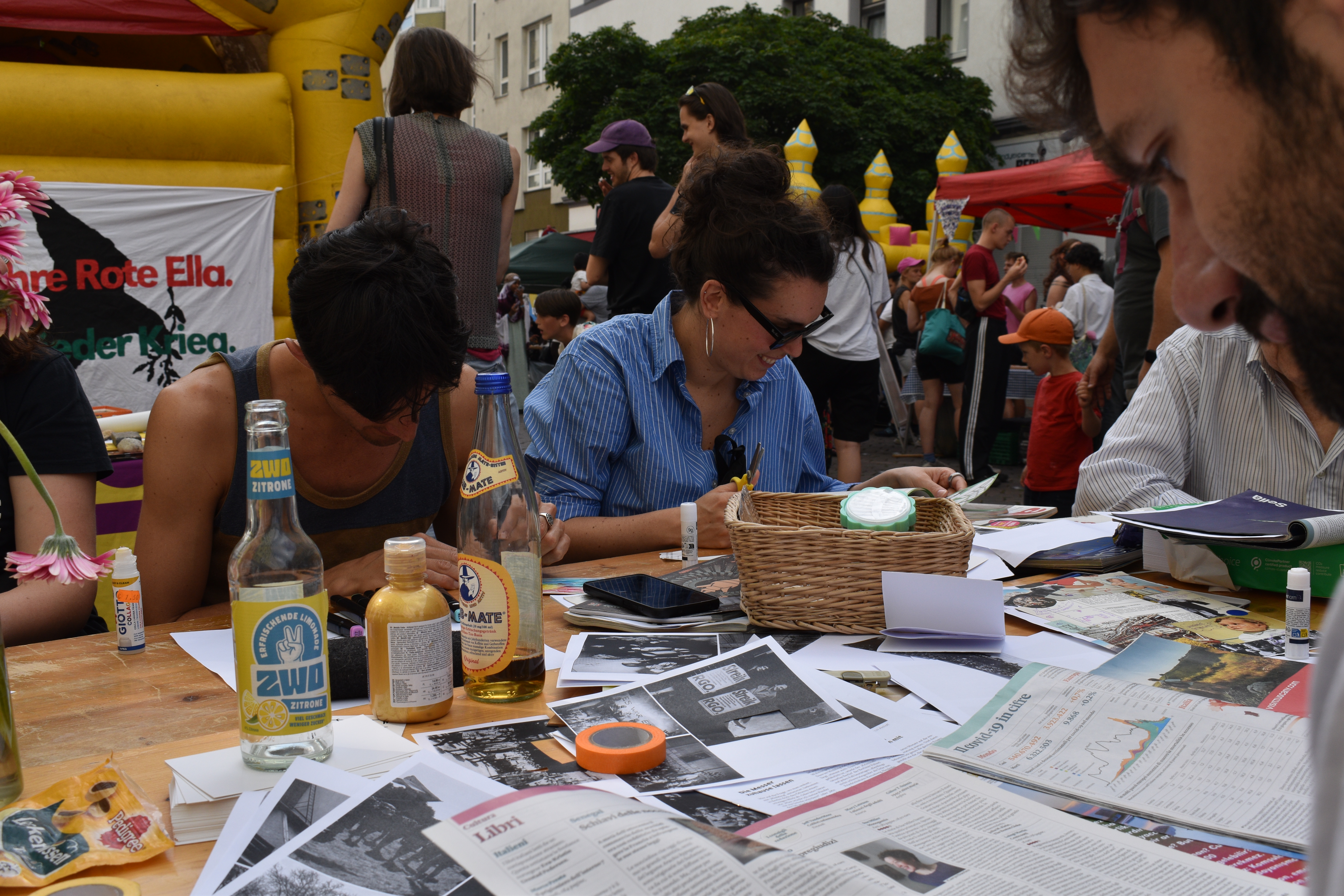
From there, people moved to a making station, choosing between building a zine, alone or with others, or writing and drawing a postcard, working from material we’d curated in advance: historic photographs of protests in Wedding, mixed with diverse more recent images of the neighborhood as it is now, with present realities, curiosities, struggles.
what the day actually did
We hadn’t expected the living room setting itself to play such a big part, either. Almost everyone who sat down ended up talking — exchanging a small postcard, sharing a story or experiencing a moment that we hadn’t planned for. And we made room for those who only stopped out of curiosity, passing by: no full sit-down required.
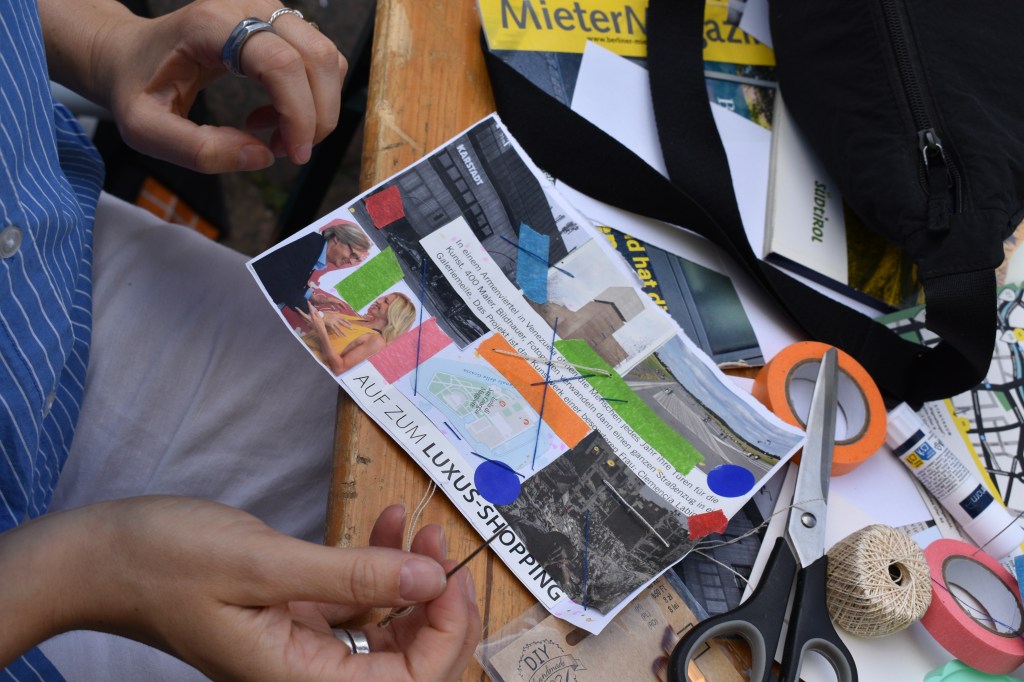
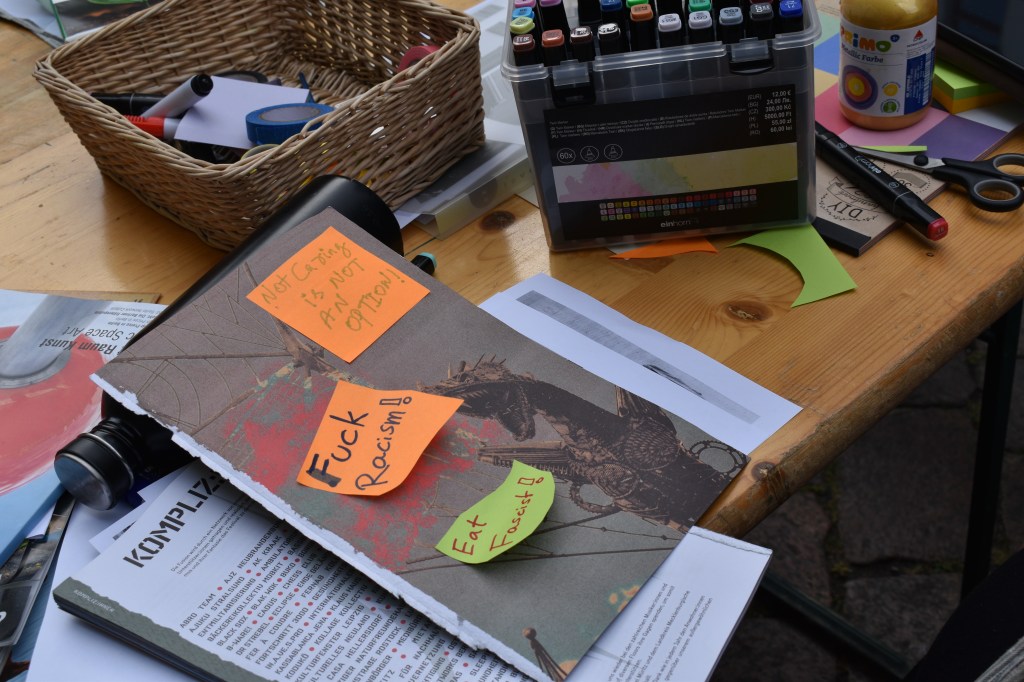
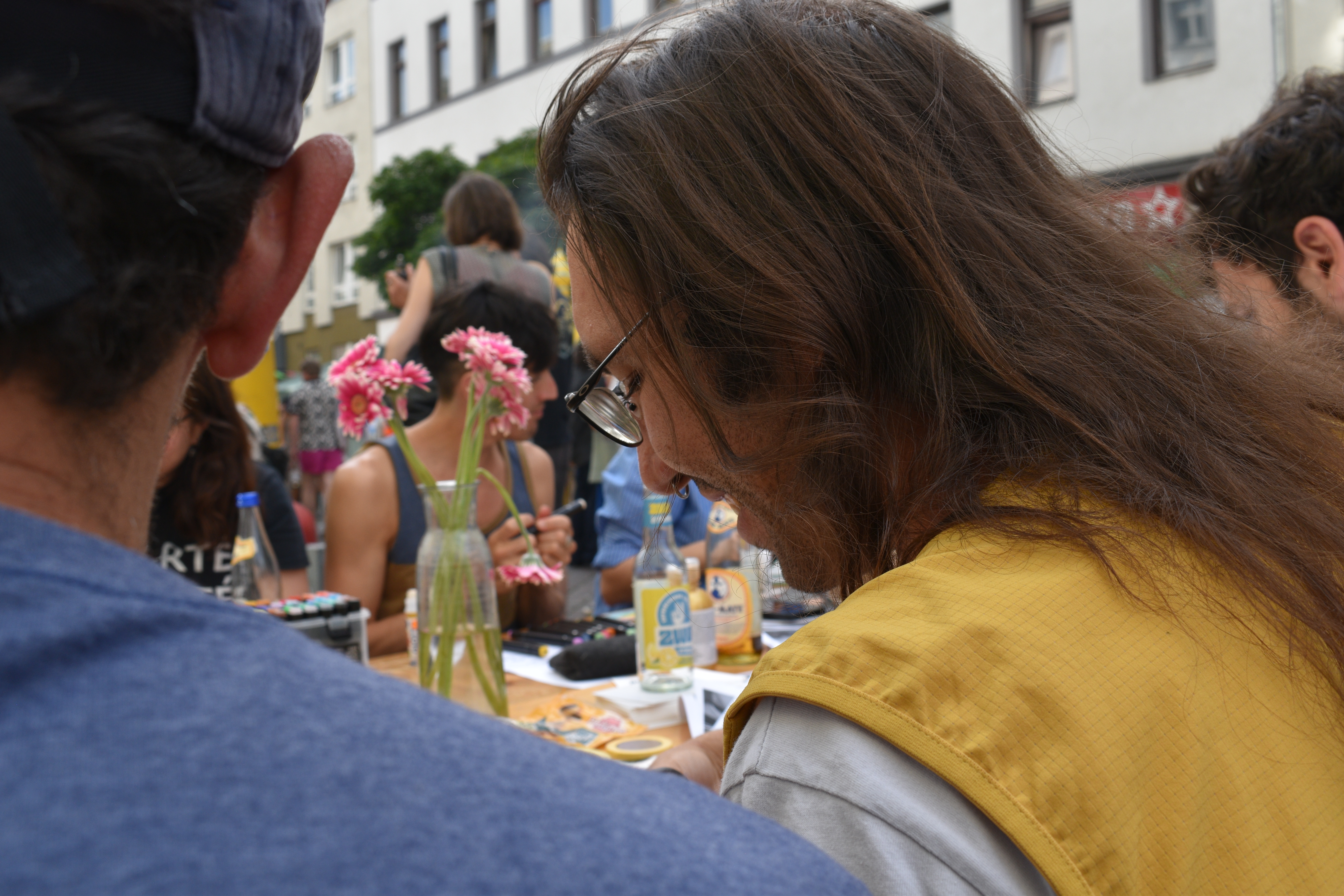
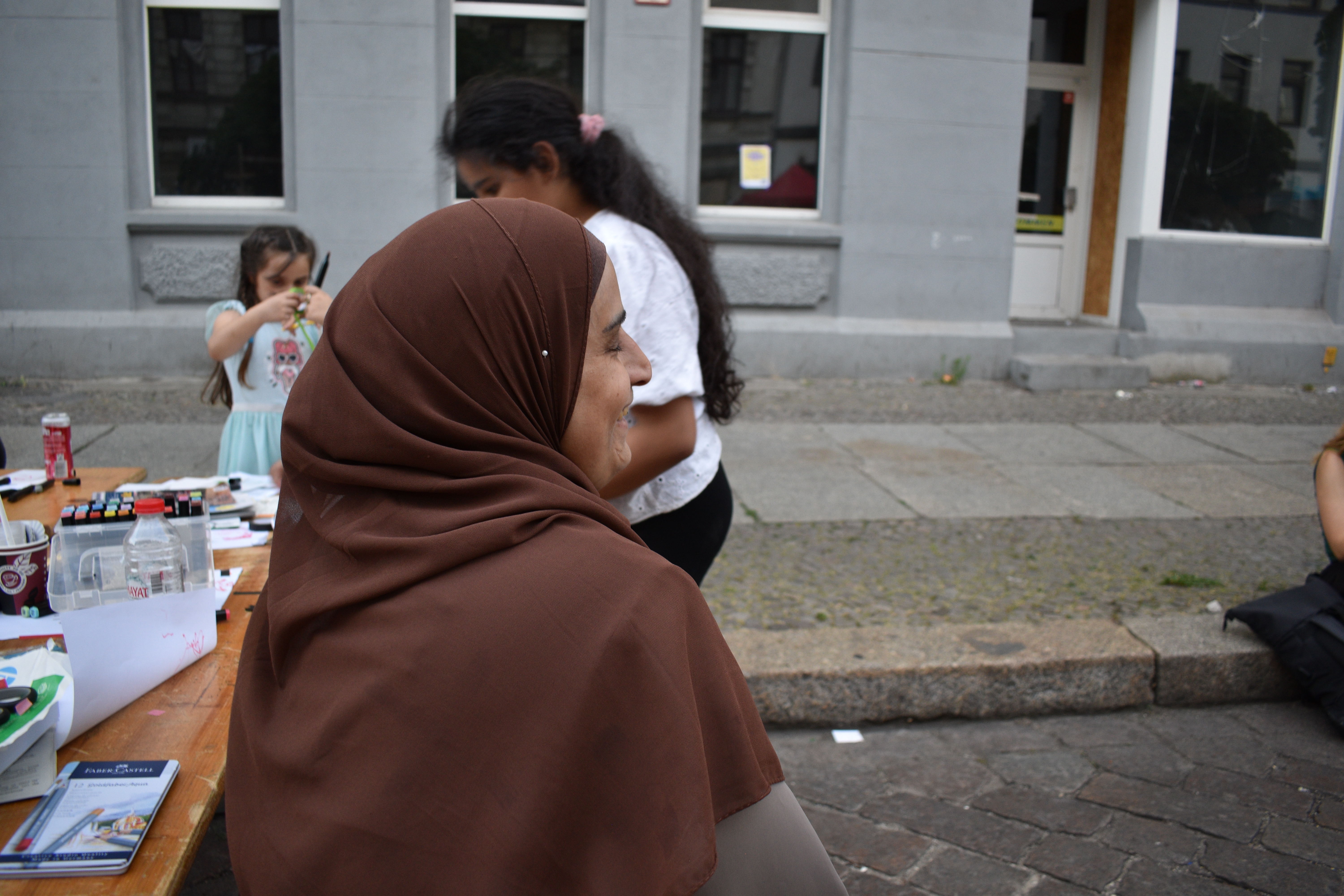
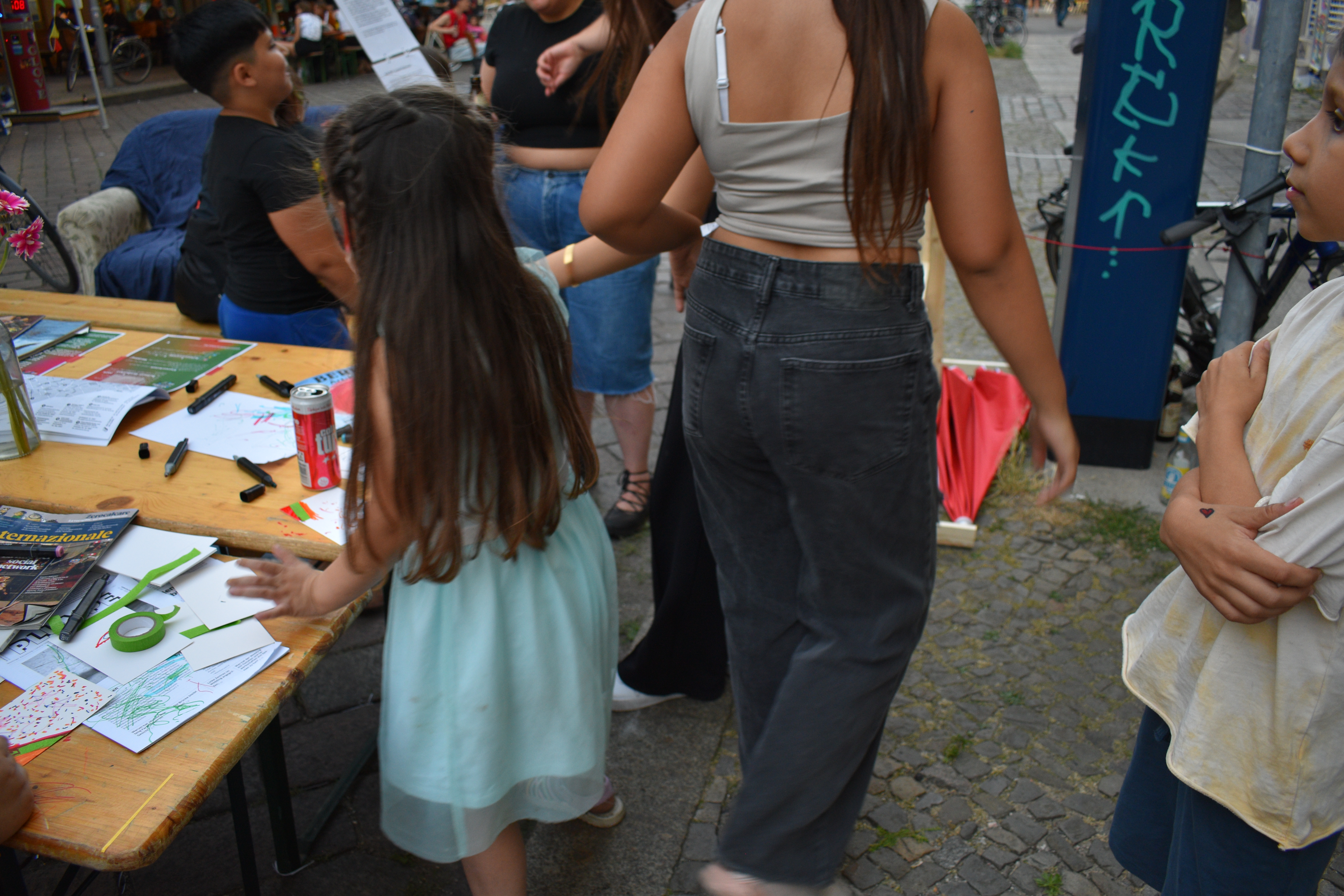
The making station ended up more open than planned, in the best way. People took it in every direction: someone stayed long enough to make four different pieces; someone spent the whole time on one elaborate one; someone wrote a single line on a postcard and left it at that; someone didn’t make anything, just sat and talked, or commented on what others were building.
The map conversation had to end earlier than planned; the festival around us was too loud to hold that kind of listening for long. Rather than force it, we let the space stay open instead. By the end, the making station had been taken over entirely by kids, who started in without needing any explanation and ended up pinning their own pieces onto the board themselves. Messy, and happy about it.
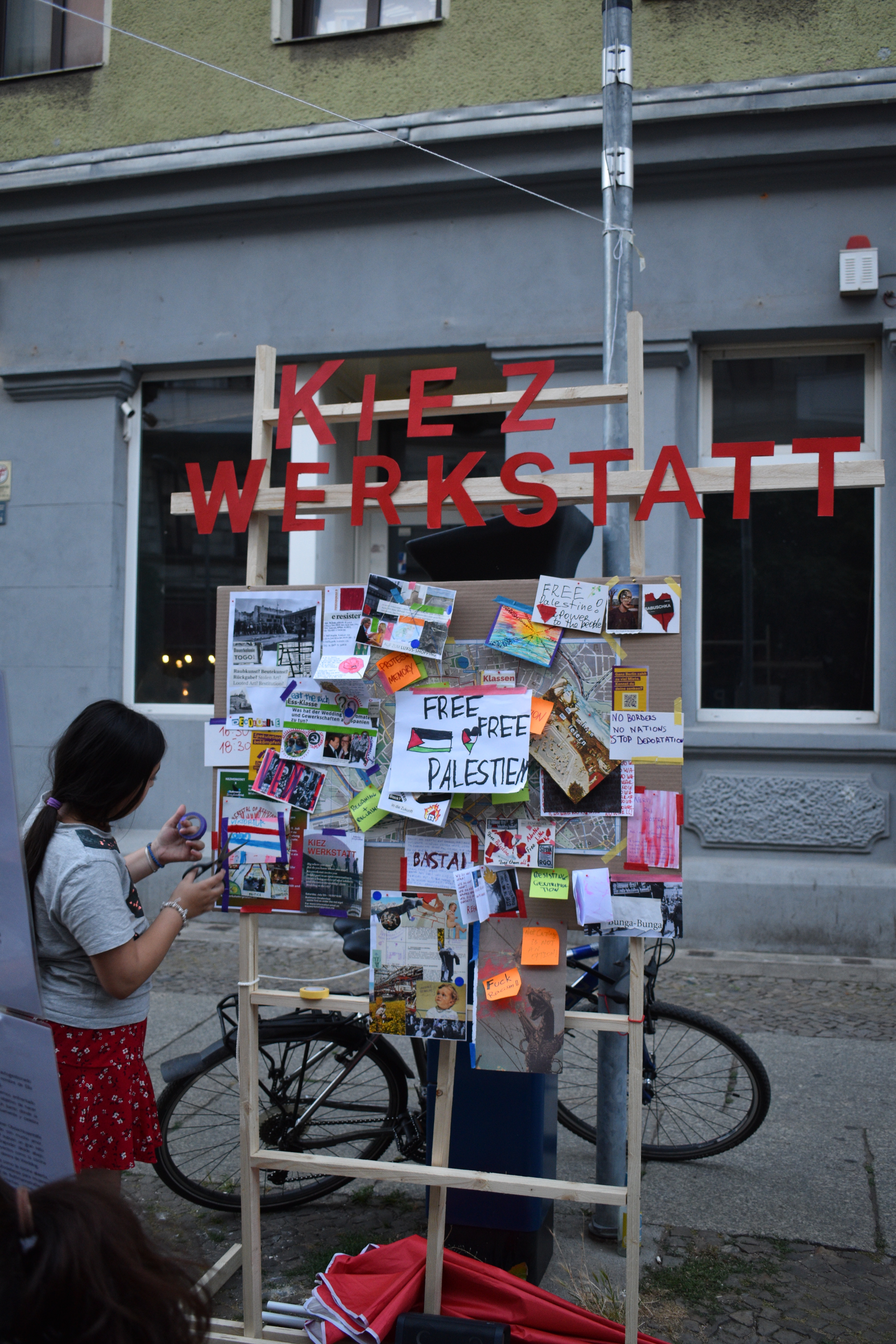
- the board didn’t stay a one-off and it’s since travelled with us into later actions in public space, holding up the same job it was built for. ↩︎
- language was its own standing decision here, not just a one-time call. we wanted the conversation open, but worried openness itself could become a barrier. A formal translation setup would have doubled the length of the day and put anyone needing it visibly on the spot. So we decided in the moment instead: english as a default, german welcome, translating informally as it came up. Likely to recur the same way in future actions. ↩︎
 KIEZWERKSTATT