Archive / Actions — 28 November 2025
Undisciplined knowledge: tools for reclaiming collectivity1
After our first action, where we tested our theoretical ideas first-hand, this was where we opened up the planning behind our events, with the questions we ask ourselves, the doubts, the contradictions we run into, to a room of people already interested in or working with participatory practices.
where this started
We first crossed paths with Urbane Praxis e.V. at their inaugural Open Office Dialogue meeting, long before we envisaged being on the other side of the table. We got in touch and what began as an informal consultation grew into a longer collaboration: they followed us to the Straßenfest in Wedding, interviewed us for their zine series The Just City and invited us to run this workshop.
For the day itself, we kept the framing simple: an afternoon of talking, thinking and making together. We wanted to keep it open and transparent rather than academic, stretching three words past their institutional definitions and into the ambiguity that participatory practice actually lives inside: multidisciplinarity, multilinguality, multisensoriality. Underneath all three sat the same questions: how do you multiply the possibilities for knowledge and for reclaiming space in an urban context? Can reclaiming space ever really remove its barriers, or do we first have to rethink what a barrier is, and who built it? If power relations can’t be dissolved, can they at least be made visible?
what it had to do
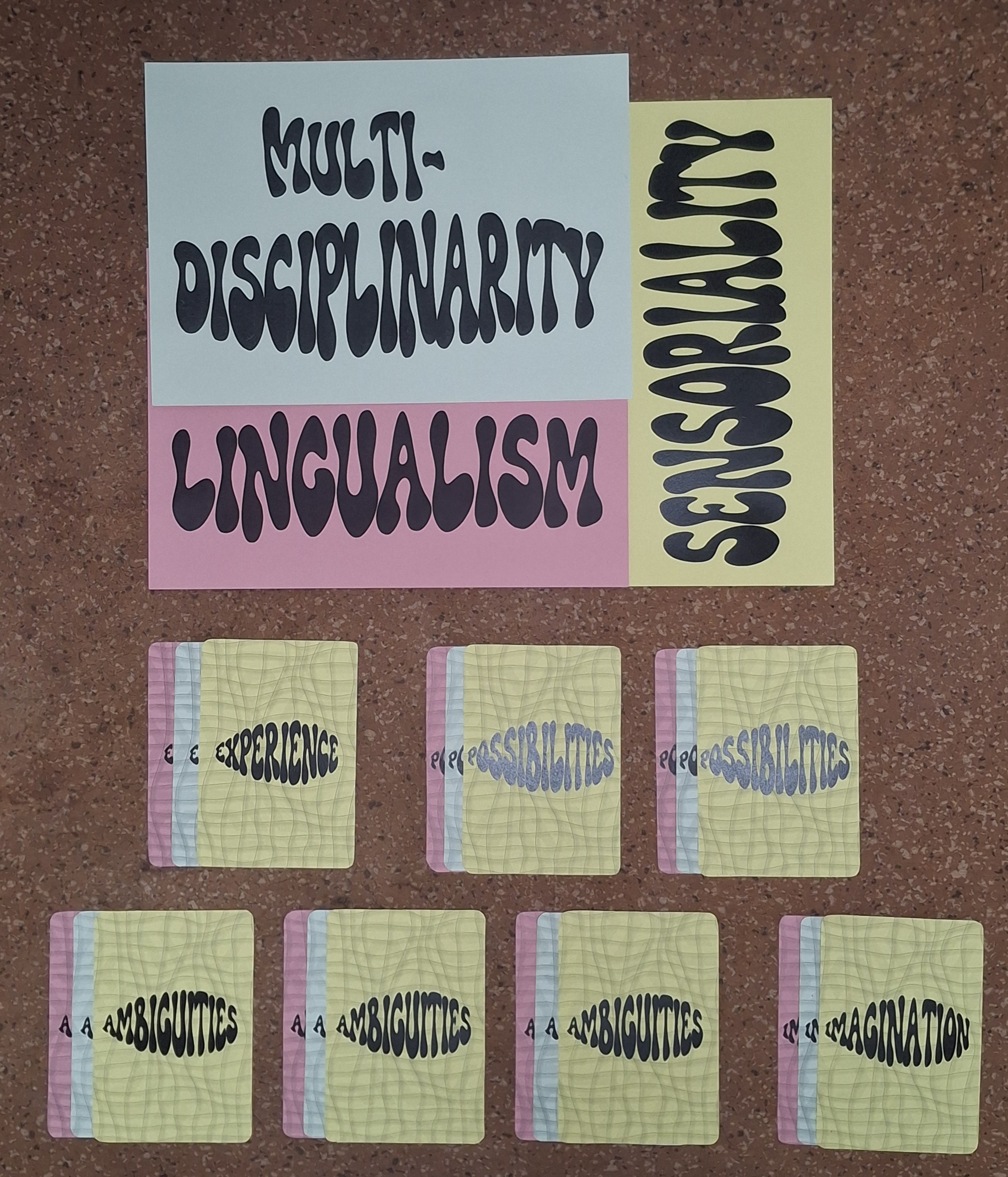
For us, the three words ‘multidisciplinarity’, ‘multilinguality’ and ‘multisensoriality’ had a more specific meaning: they represented three recurring arguments that we had with each other, both discussing the praxis in theory and while planning our action – and which had remained unresolved.
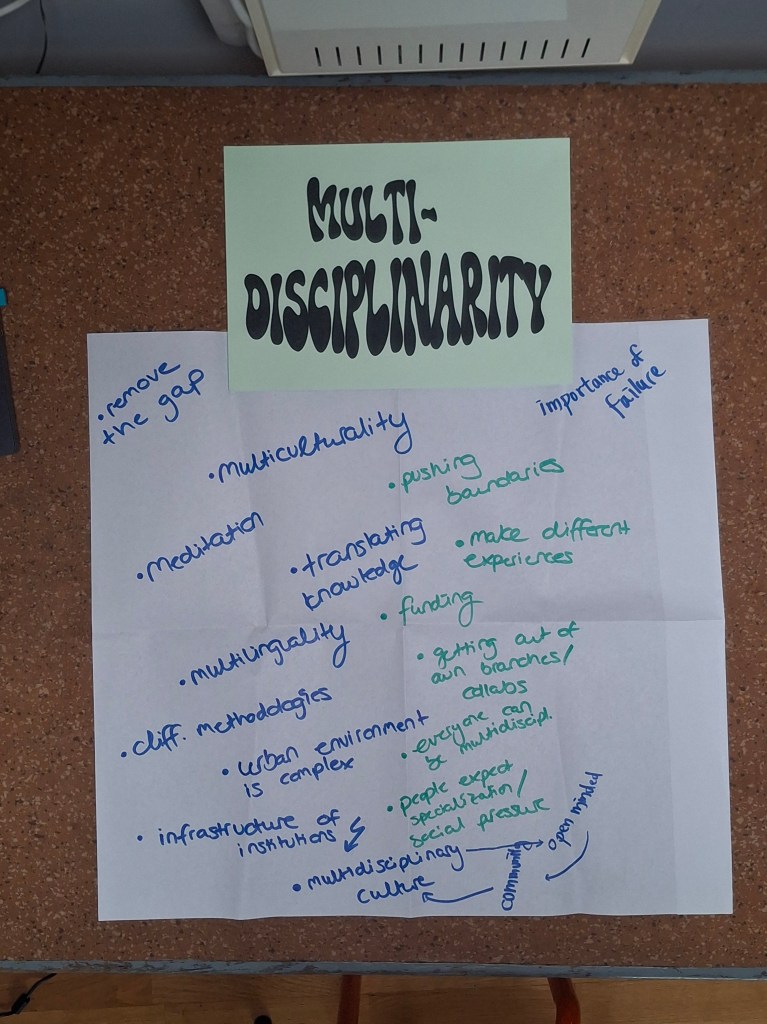
- multidisciplinarity. the project runs on the two of us bringing different backgrounds into the same room. But bringing isn’t the same as using it well. Which of what we each carry actually matters here, and which is just habit?
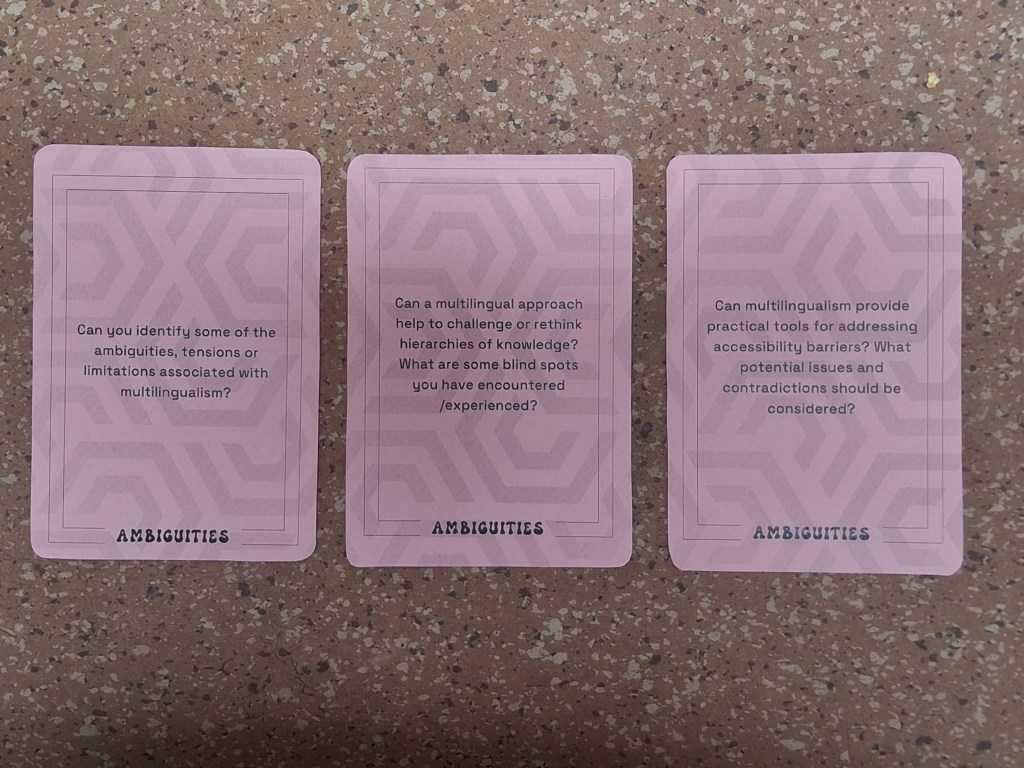
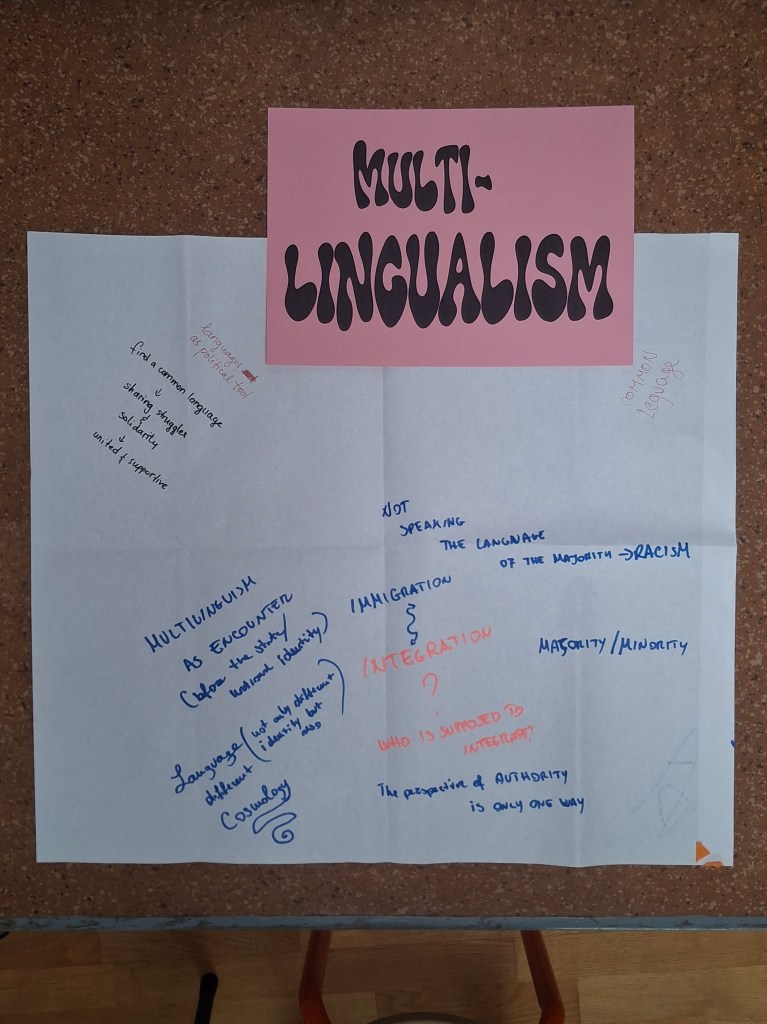
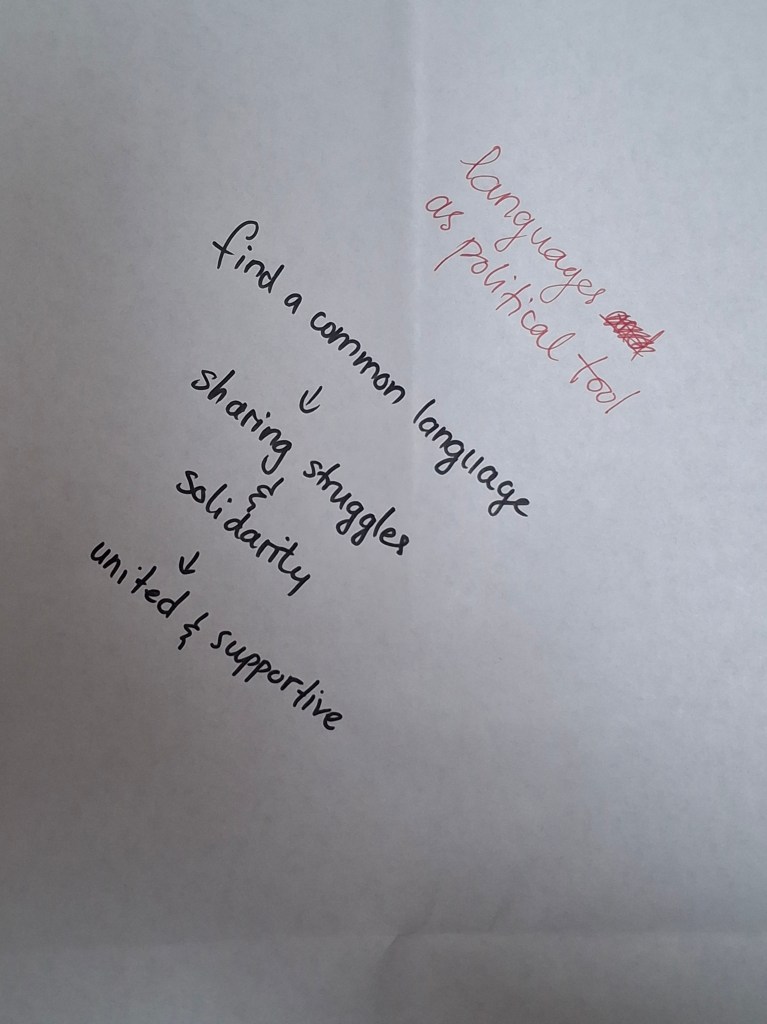
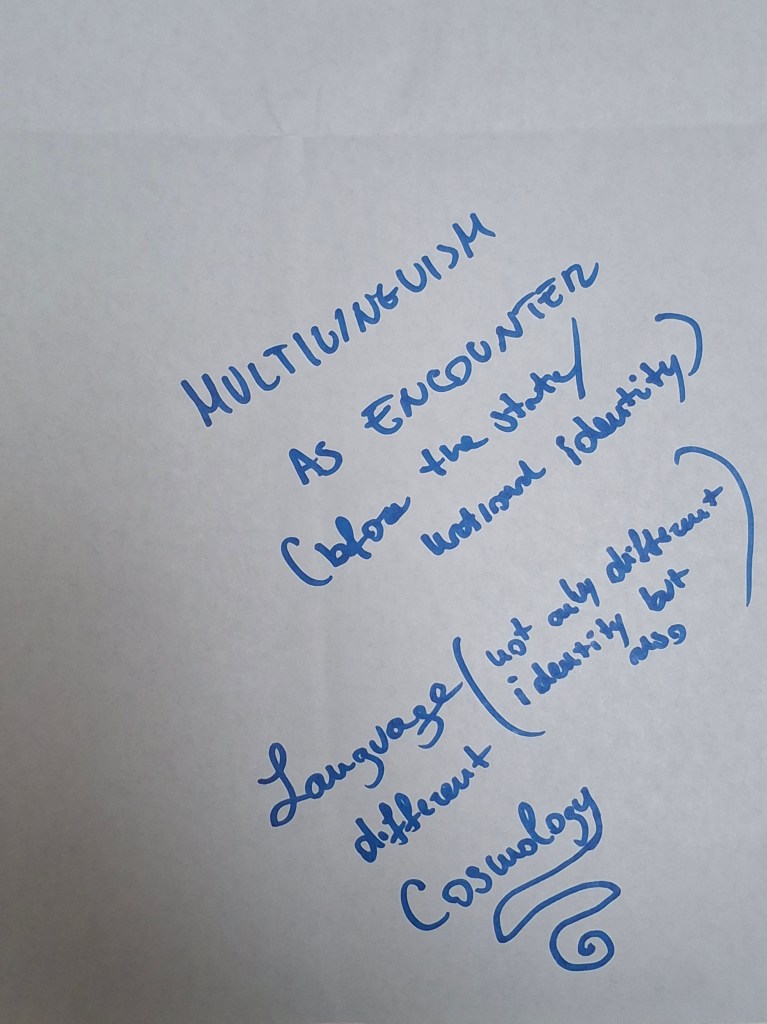
- multilingualism. how do you choose one working language for a group of strangers, and who gets quietly excluded by that choice? We’d never managed to decide this in the abstract. In practice, we let the room decide instead.
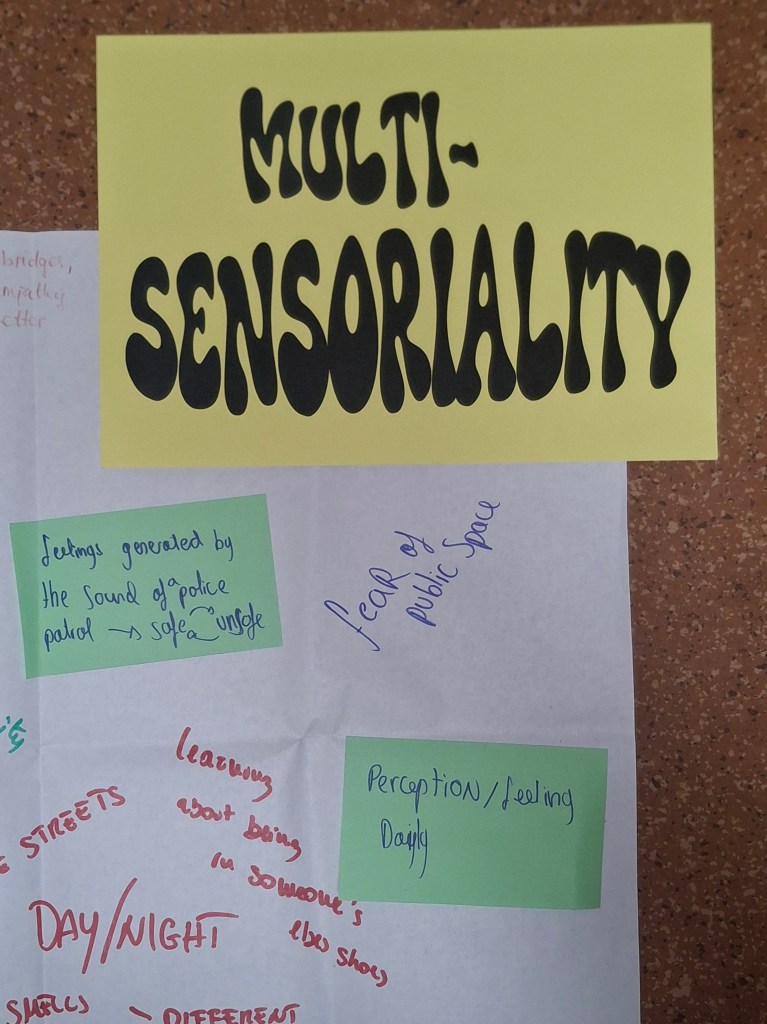
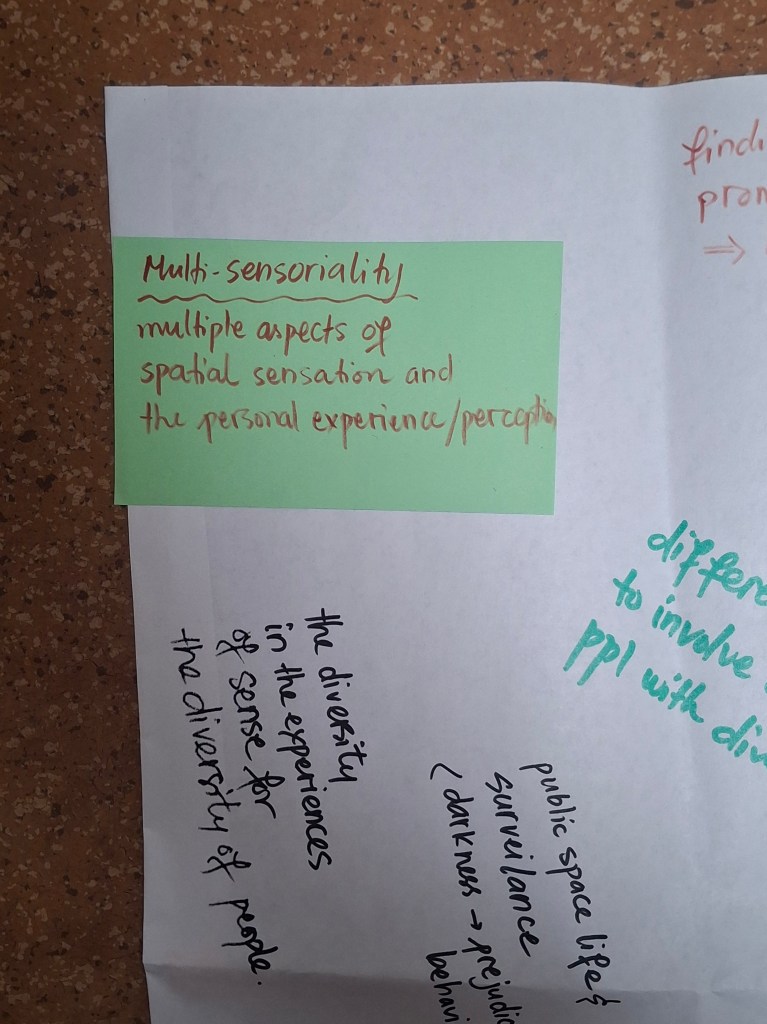
- multisensoriality. how far do you go in making an experience feel special rather than banal, and at what point does “special” turn into its own kind of barrier?
We wanted the workshop to be an open process to collaboratively explore these topics: we wanted to claim and share the time and space to delve into the meaning, the possibilities and the ambiguities behind each topic and consider how they could be approached from a new perspective.
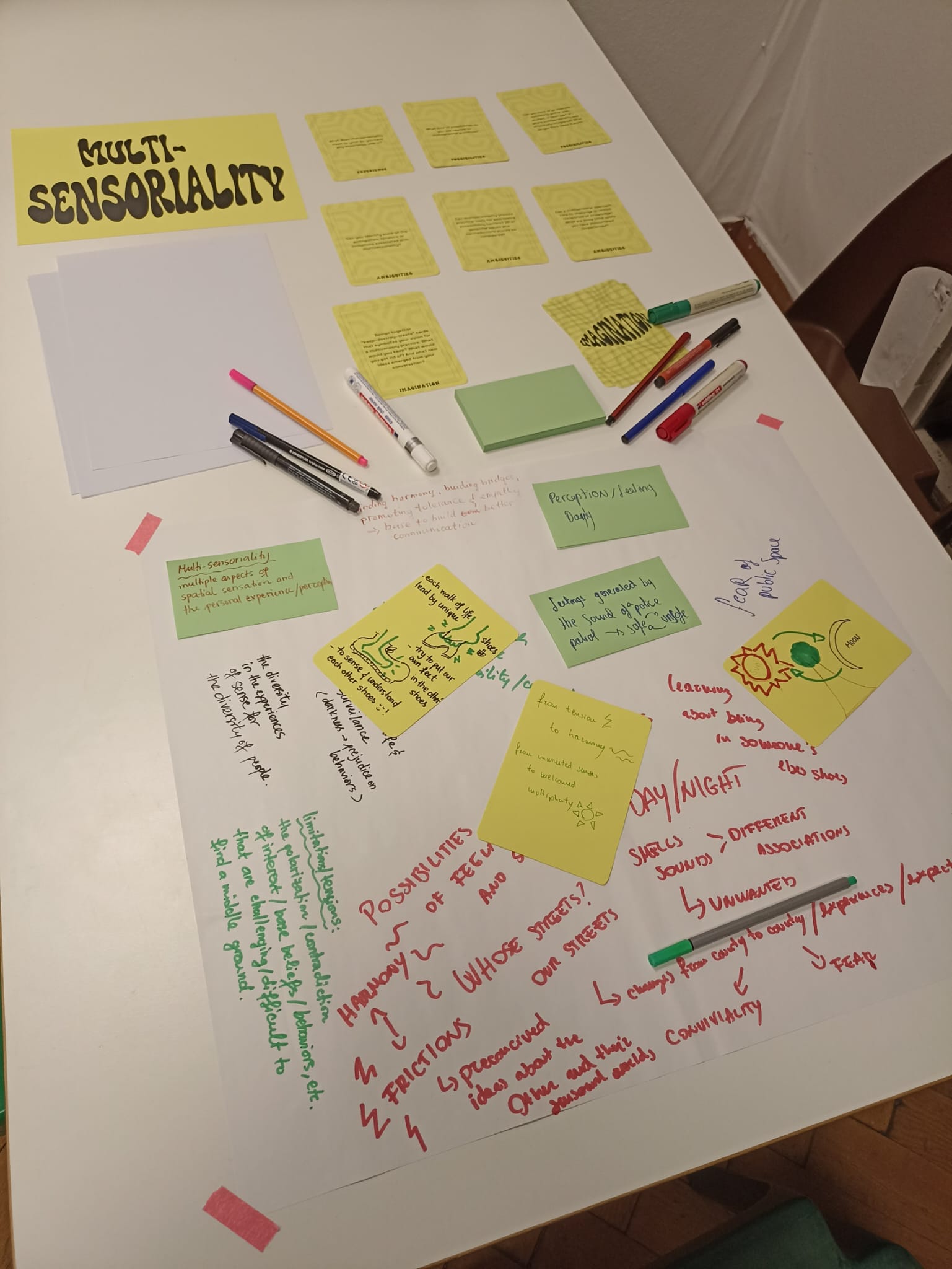
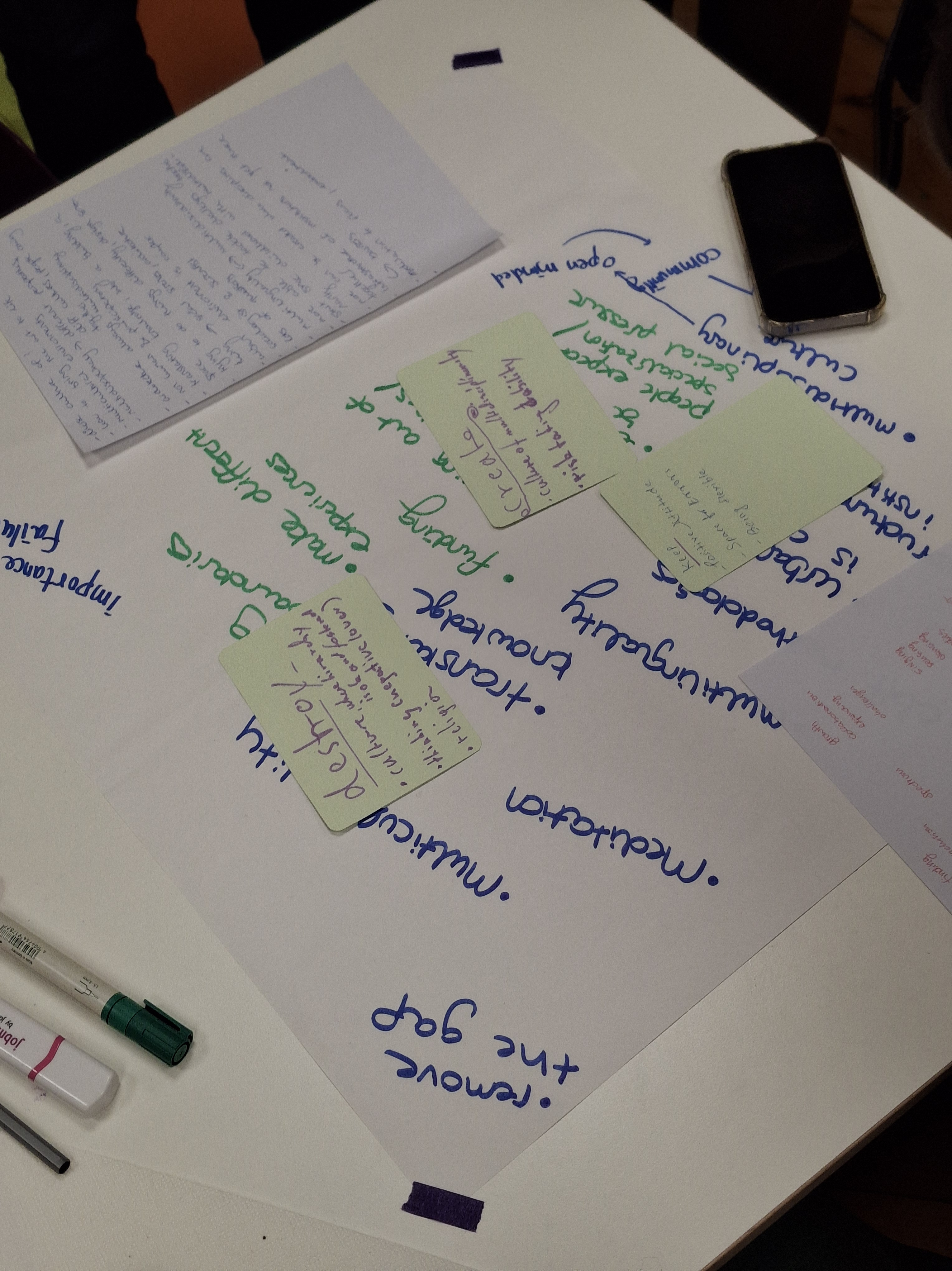
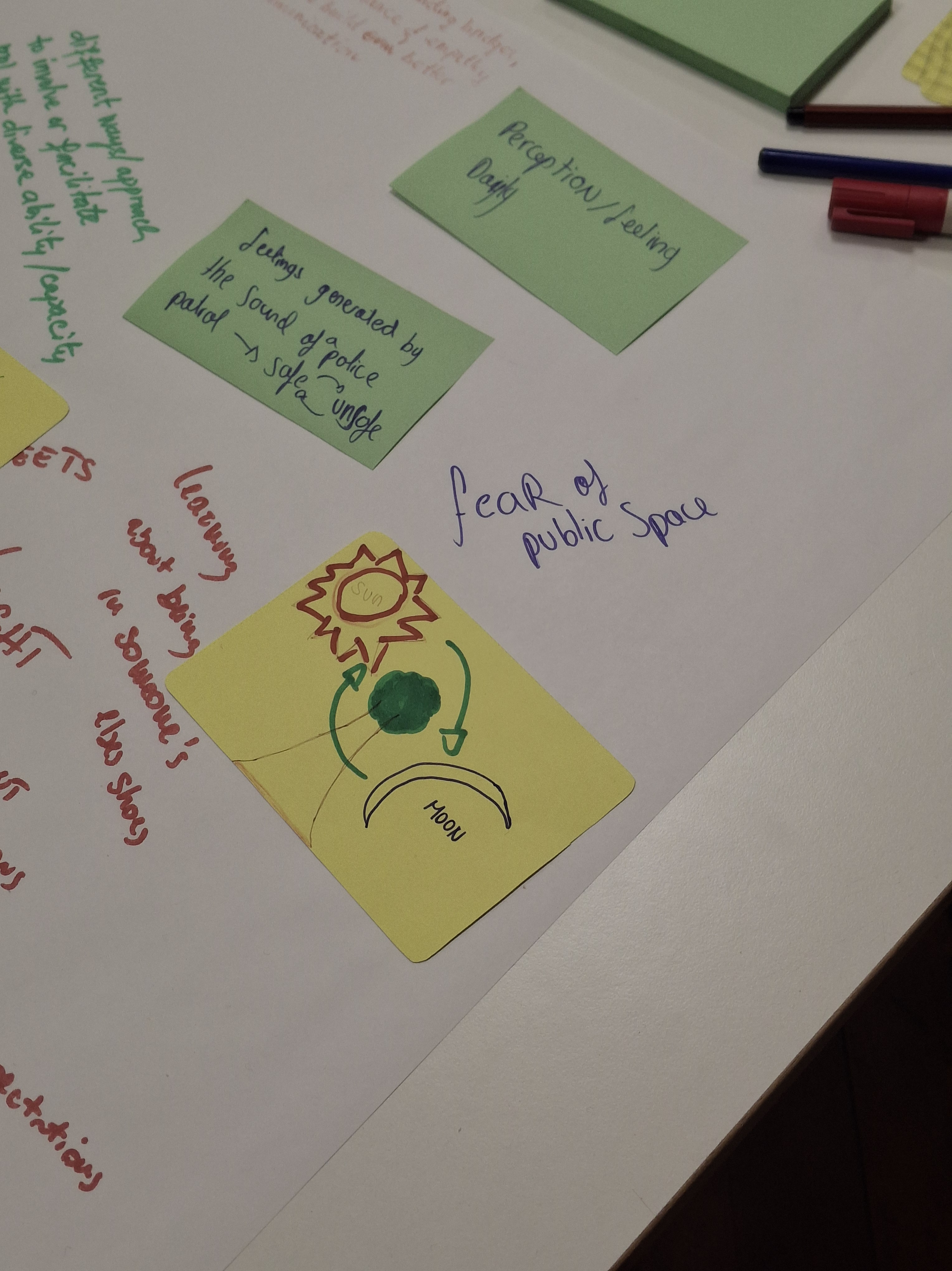
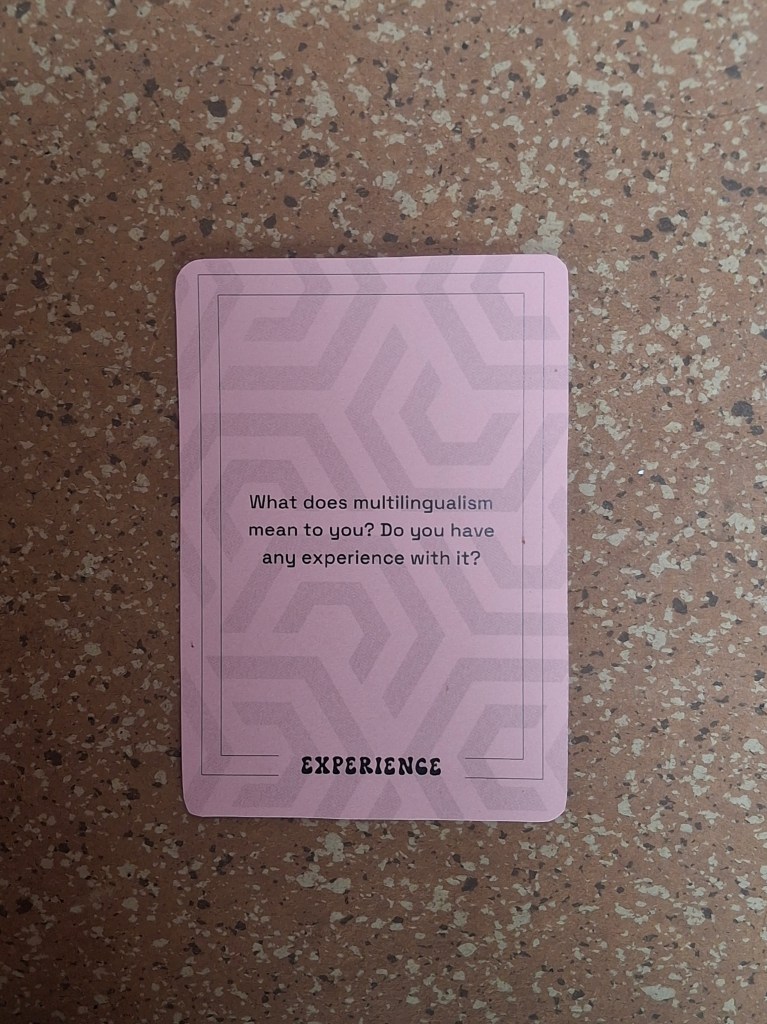
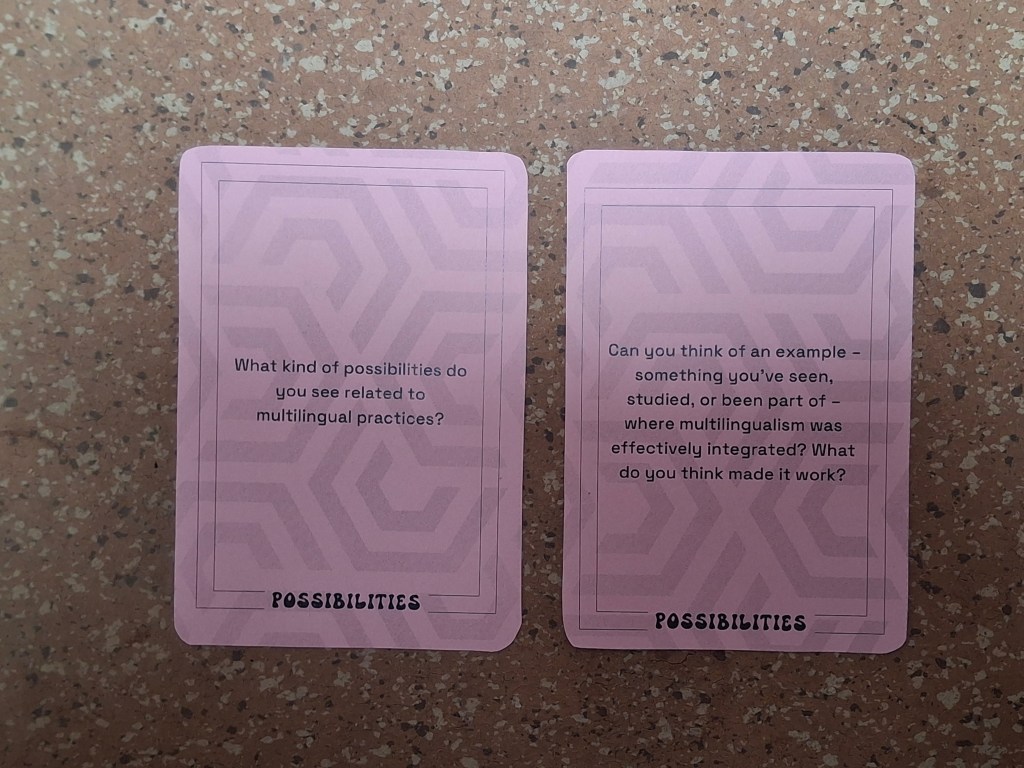
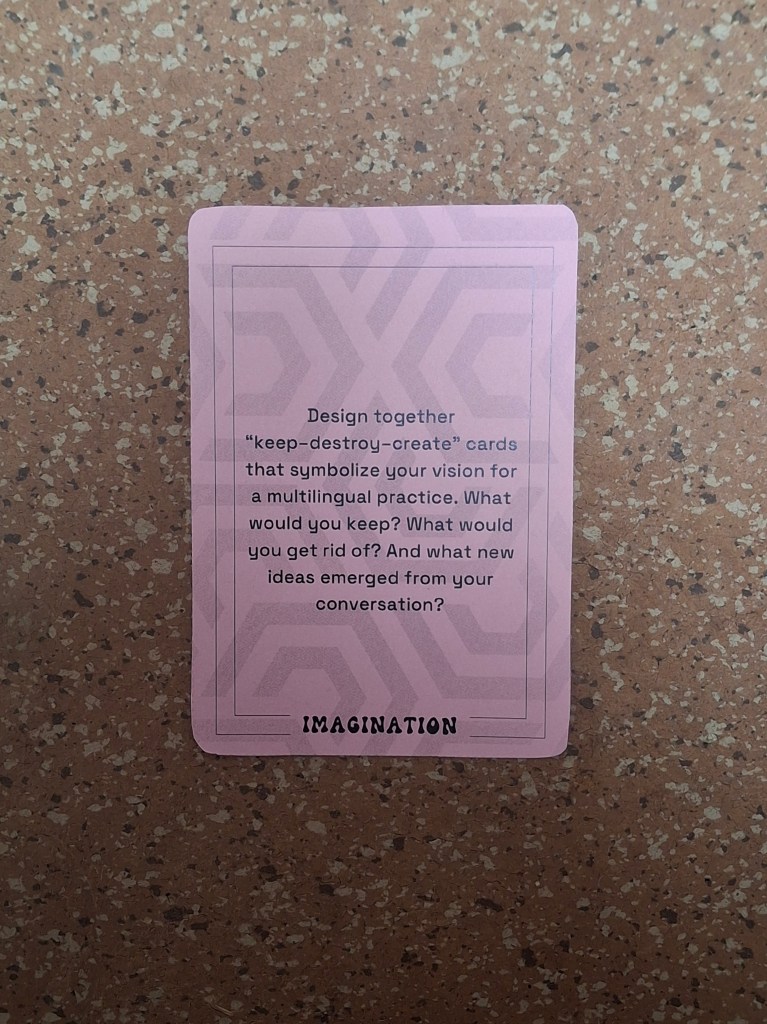
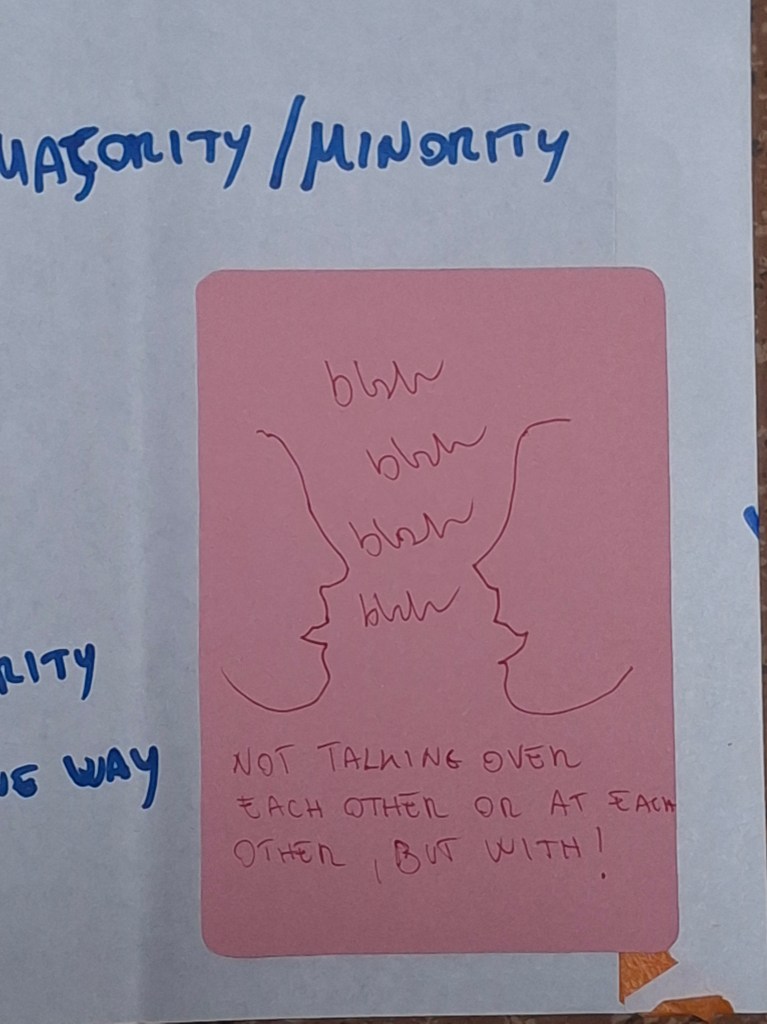
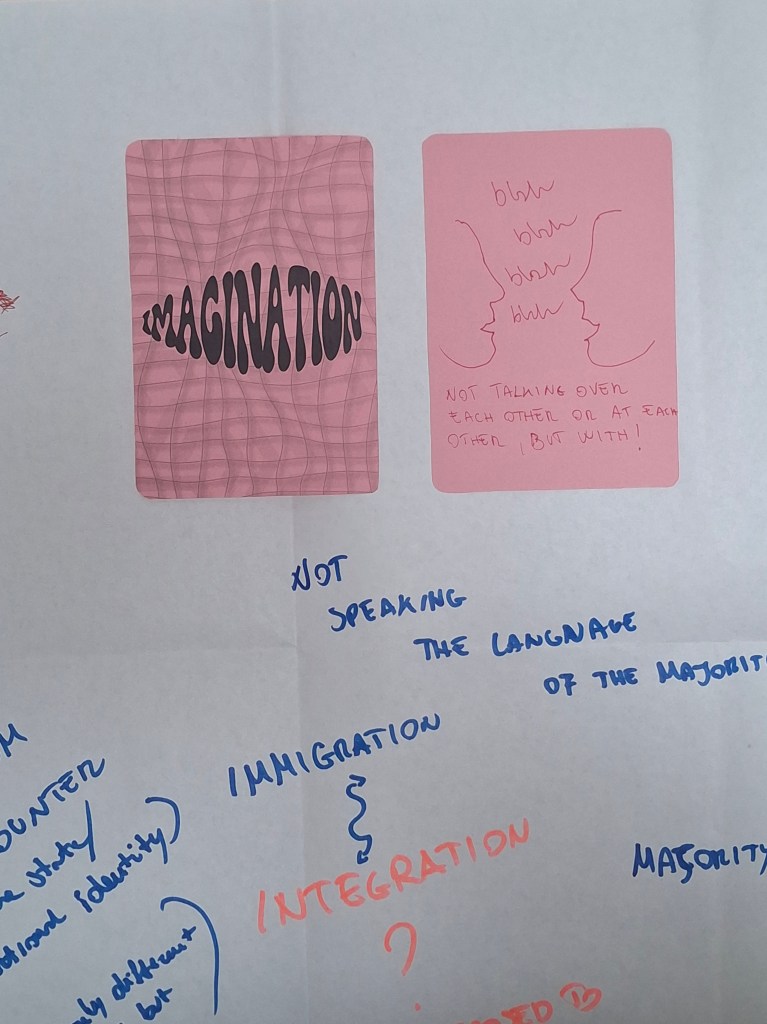
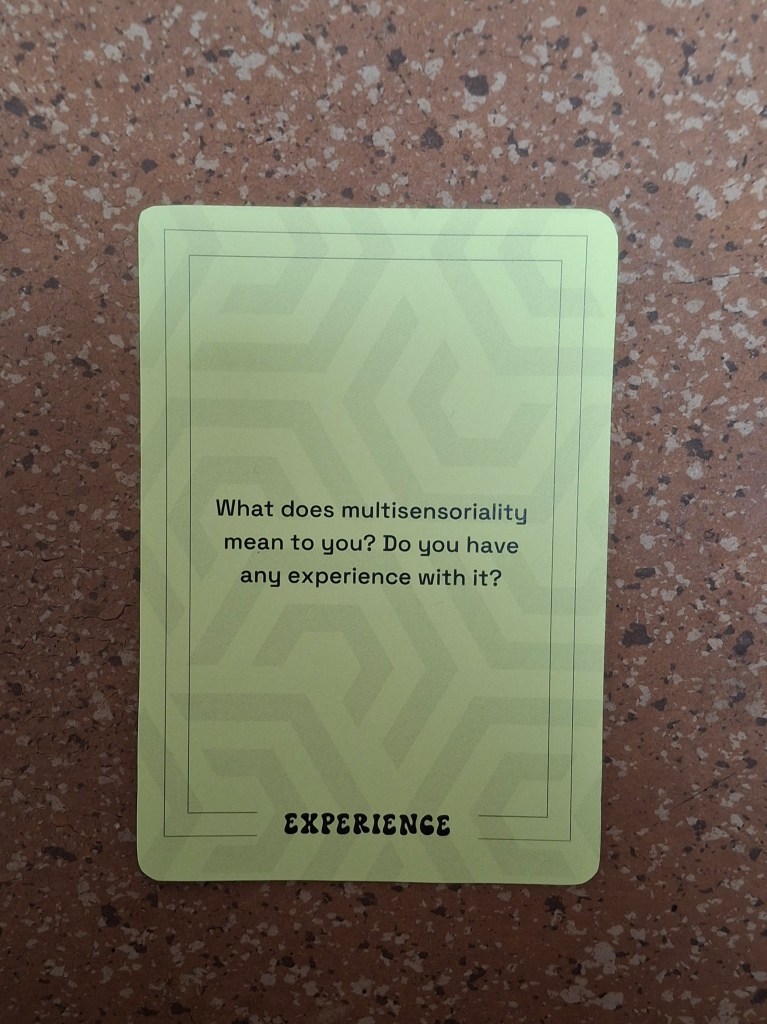
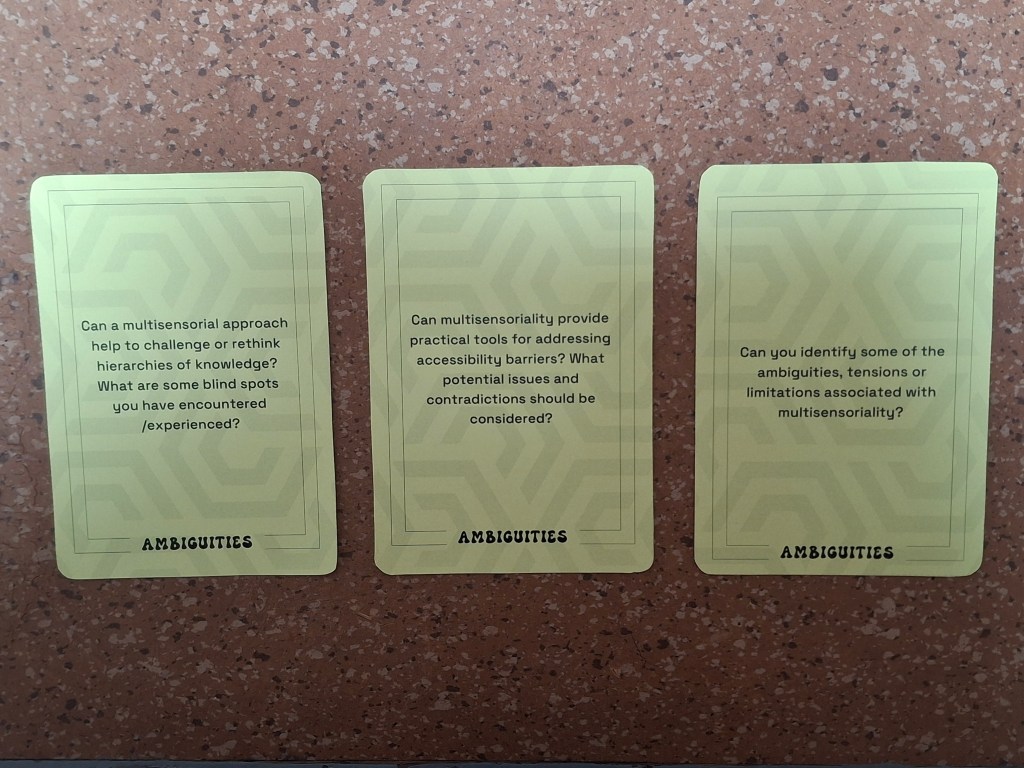
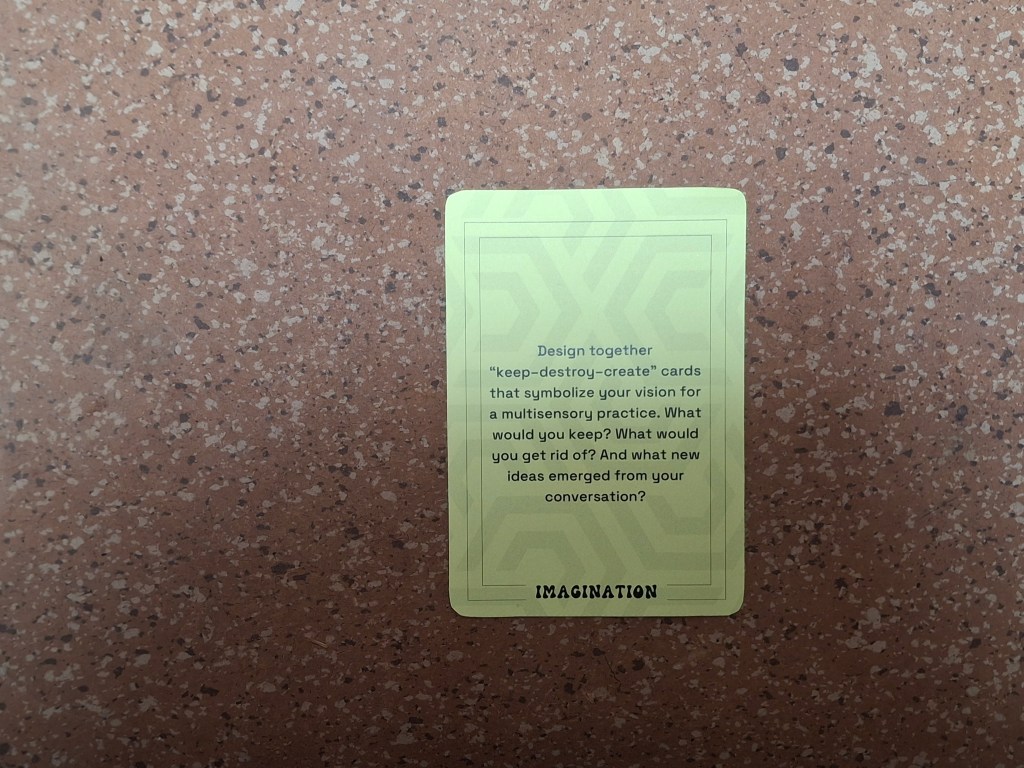
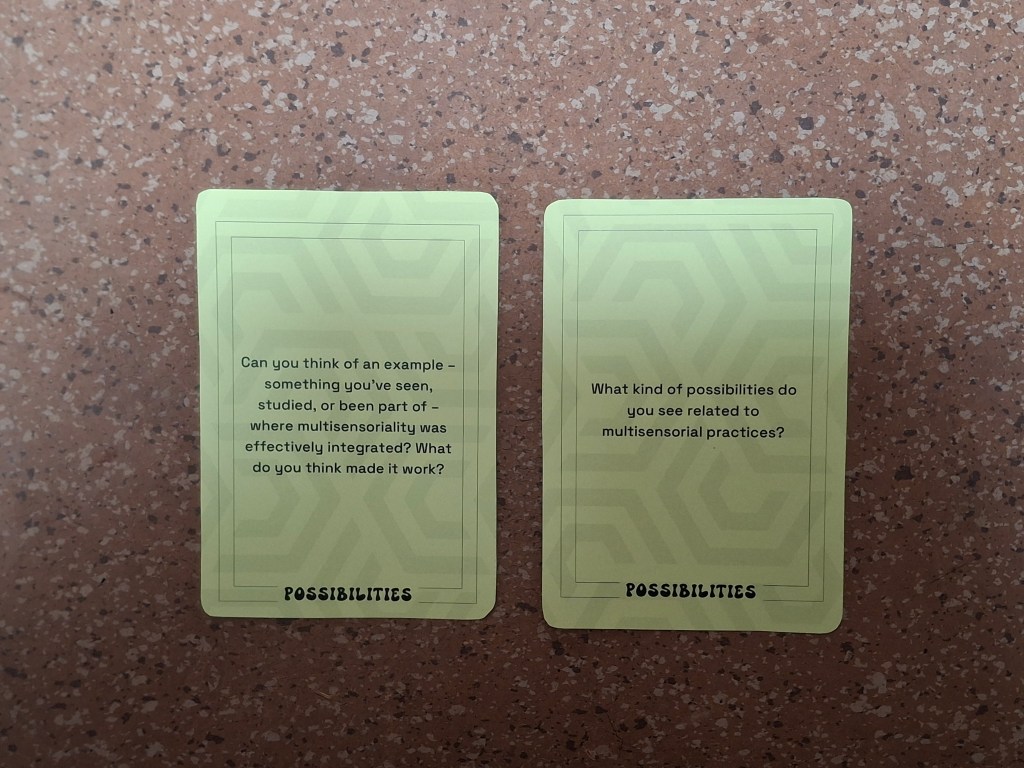
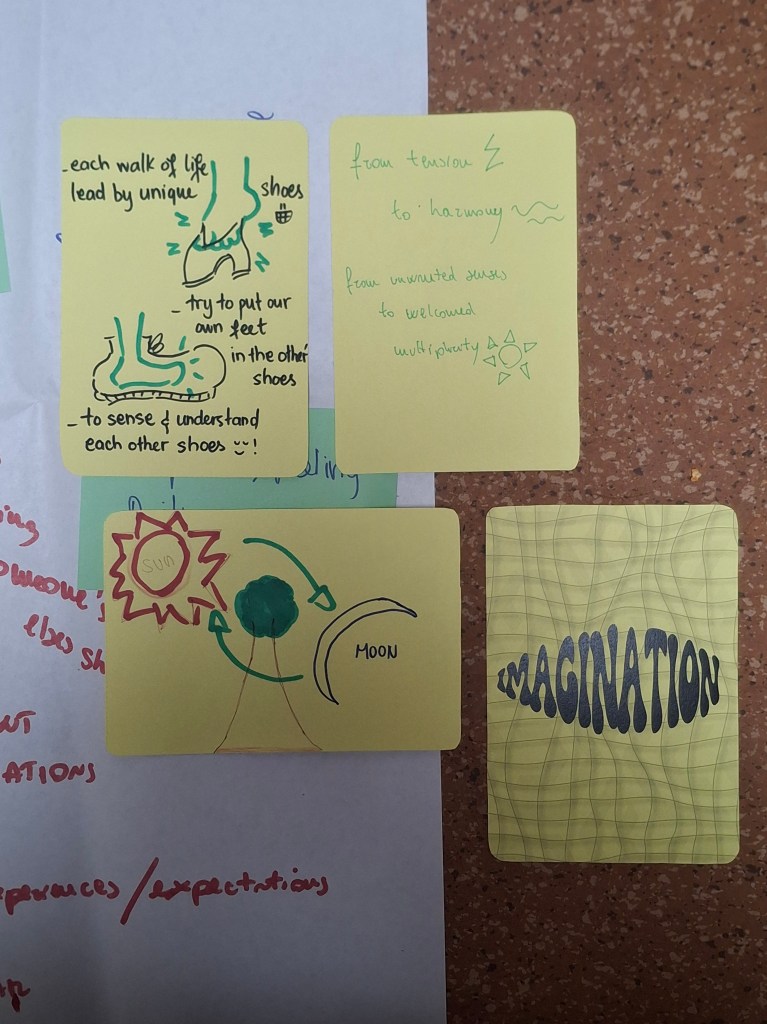
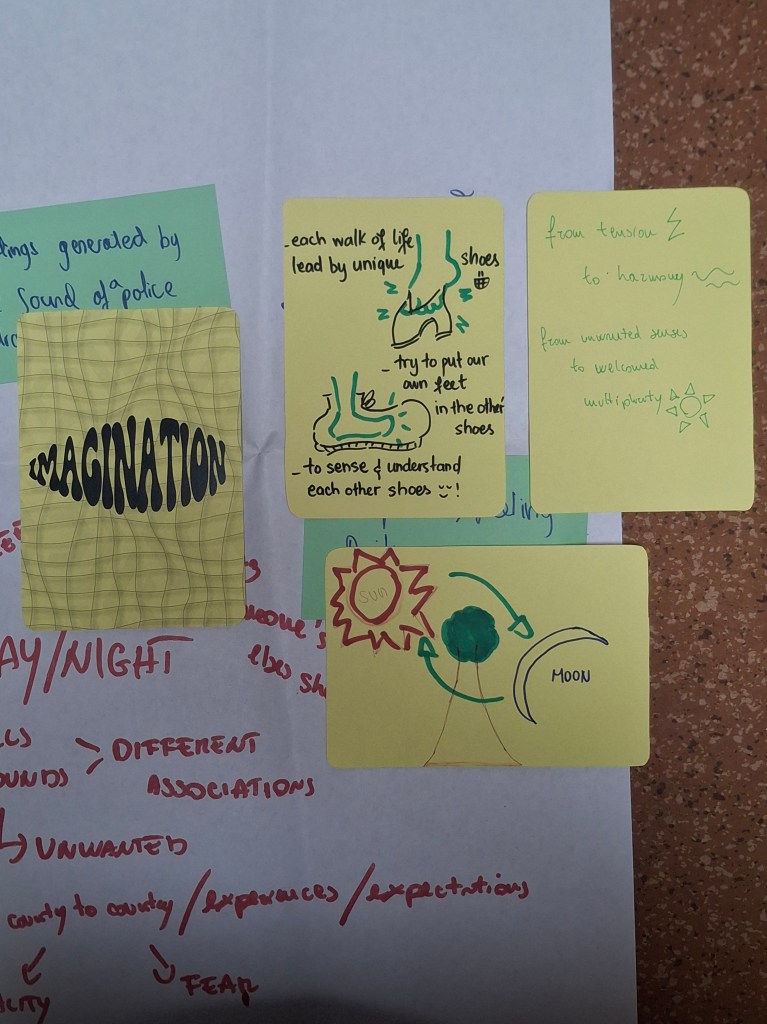
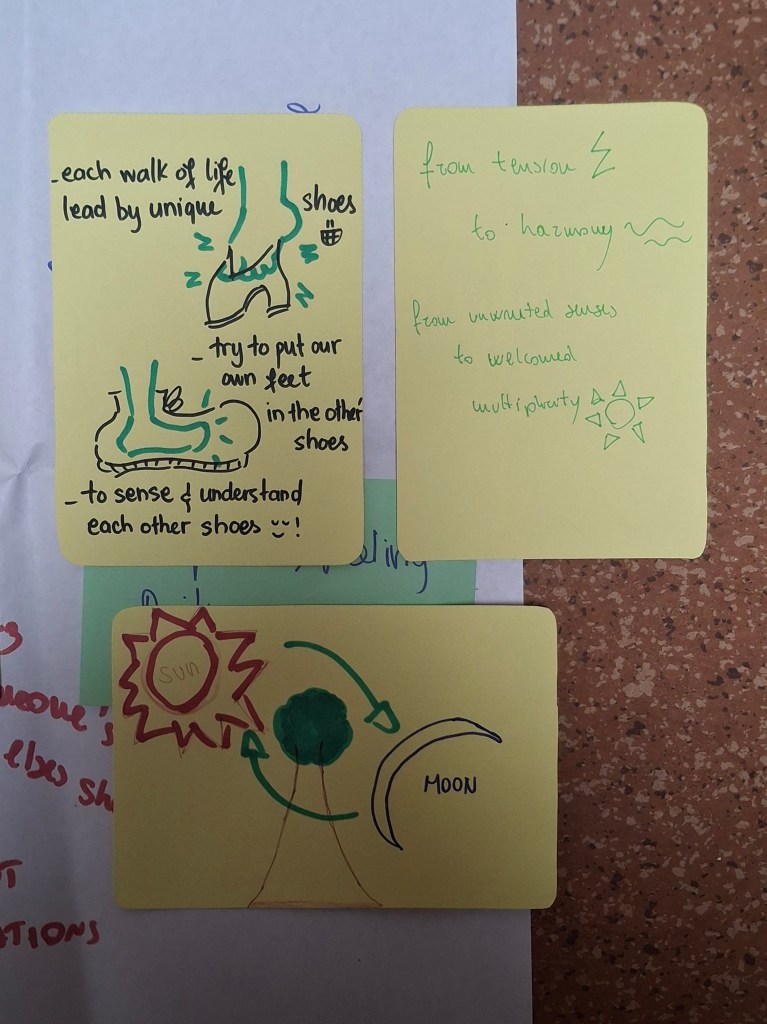
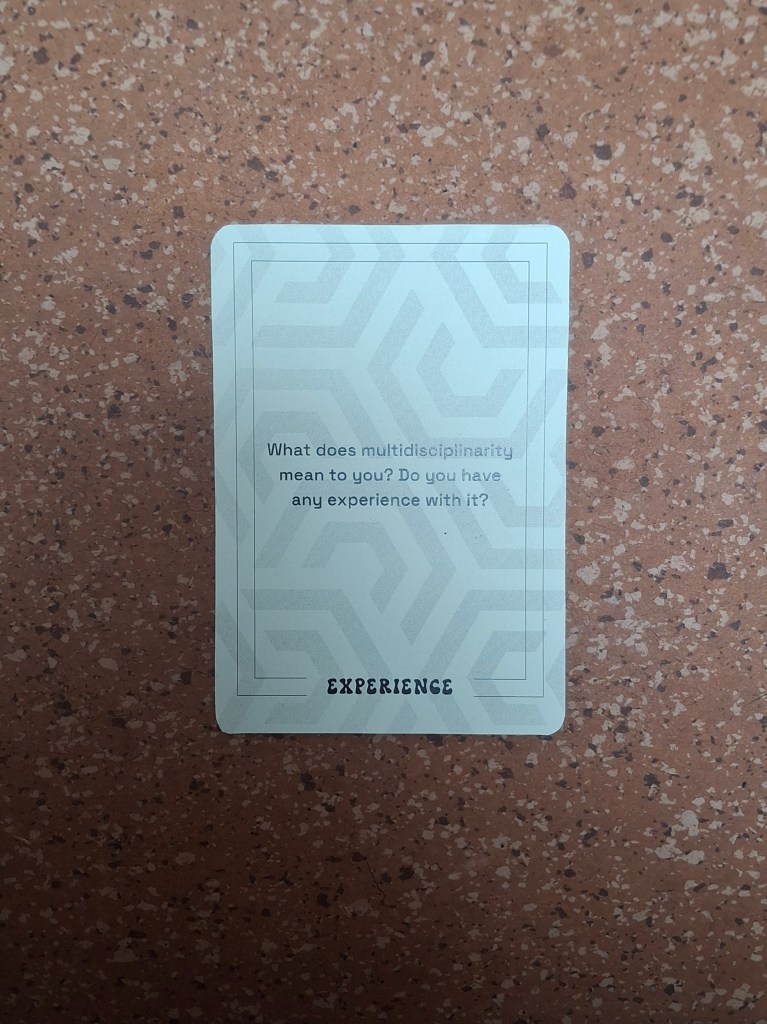
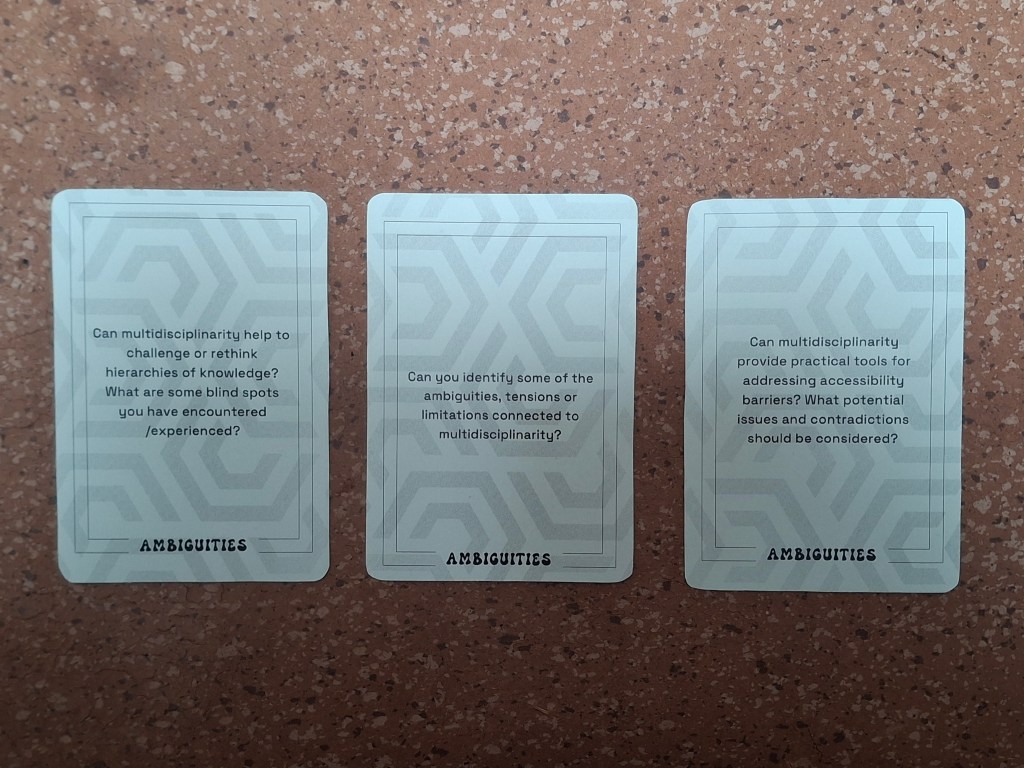
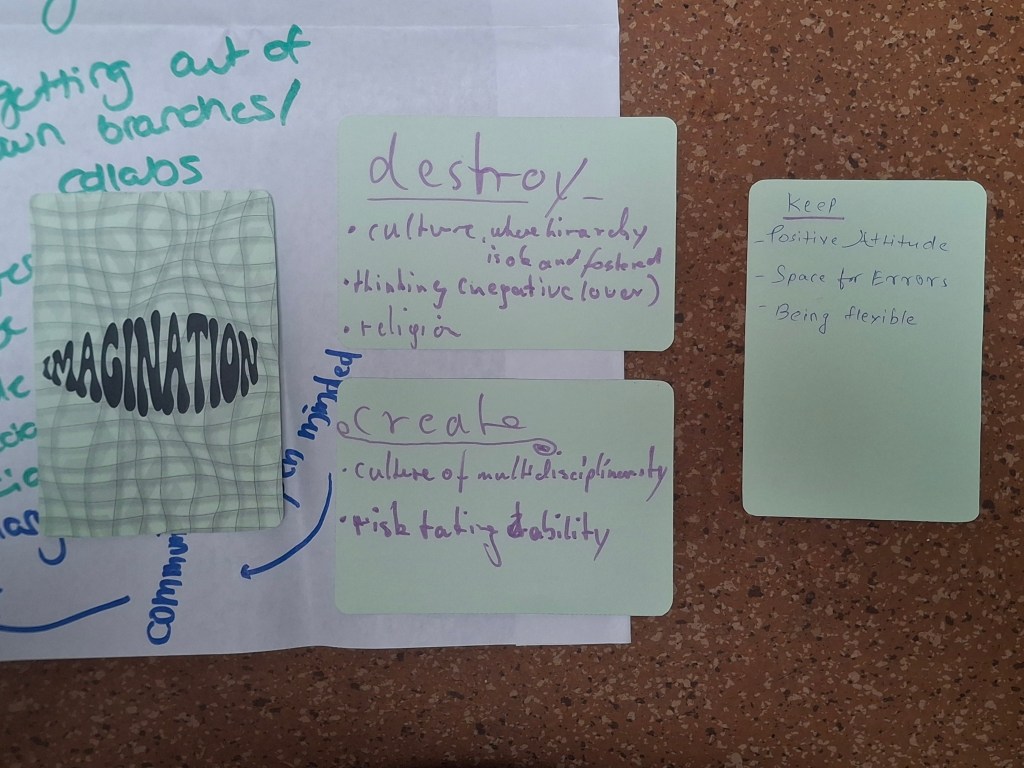
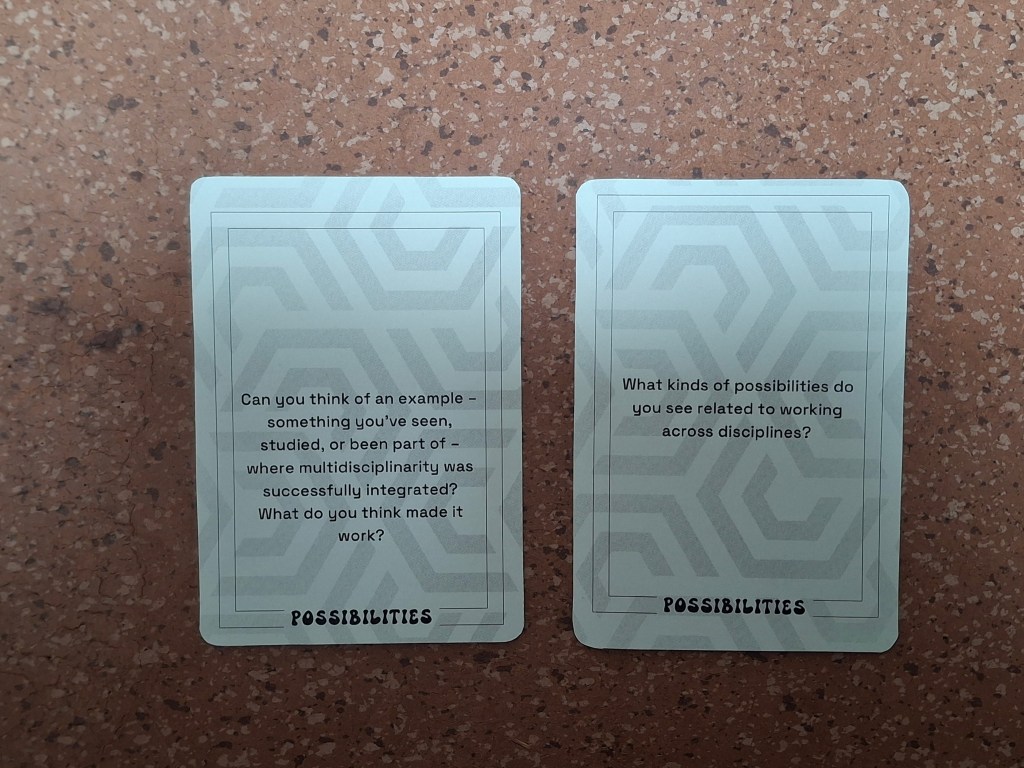
Building on the tarot deck imagery used for the ice-breaker, we created a new set of discussion cards, including question and blank cards. By the end of the day, each group had selected one to three cards representing what they would destroy, rebuild or invent within their topic, providing a small guide for future actions created by people other than ourselves.
the room we built around it
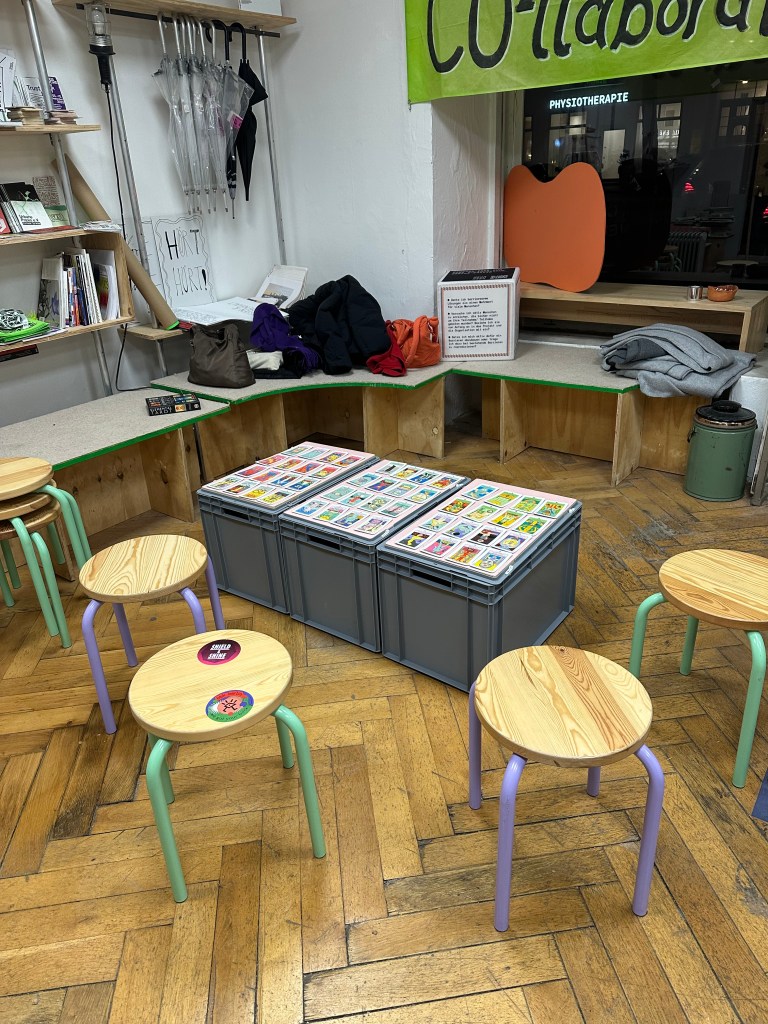
We designed the space to encourage movement. Active participation required movement, so we designed the room to facilitate this. Instead of assigning seats or corners, we divided Urbane Praxis’s office into two zones and allowed participants to move between them.
Near the entrance is a welcome zone with stools and low tables borrowed from the office. These are loose enough to sit around and talk on before anything formal starts. Further in was a discussion zone with three fixed tables, one per topic. These tables were deliberately unmoving so that, rather than being directed by the room, people could direct themselves through it, choosing where to sit, how long to stay and when to move on to another topic.
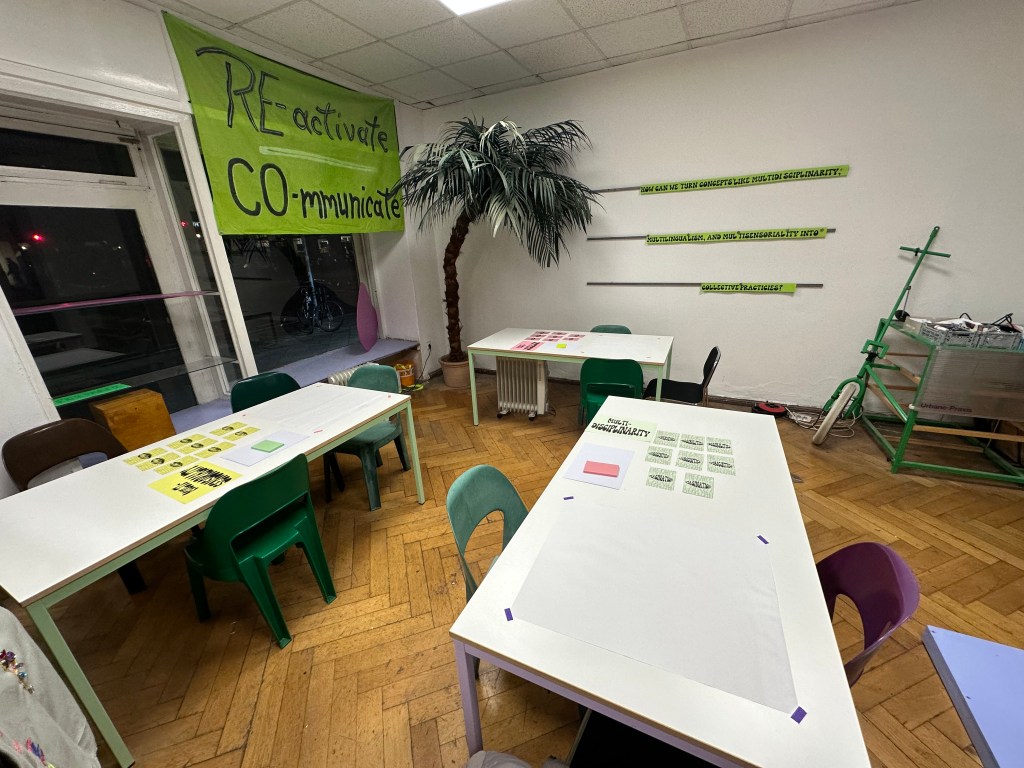
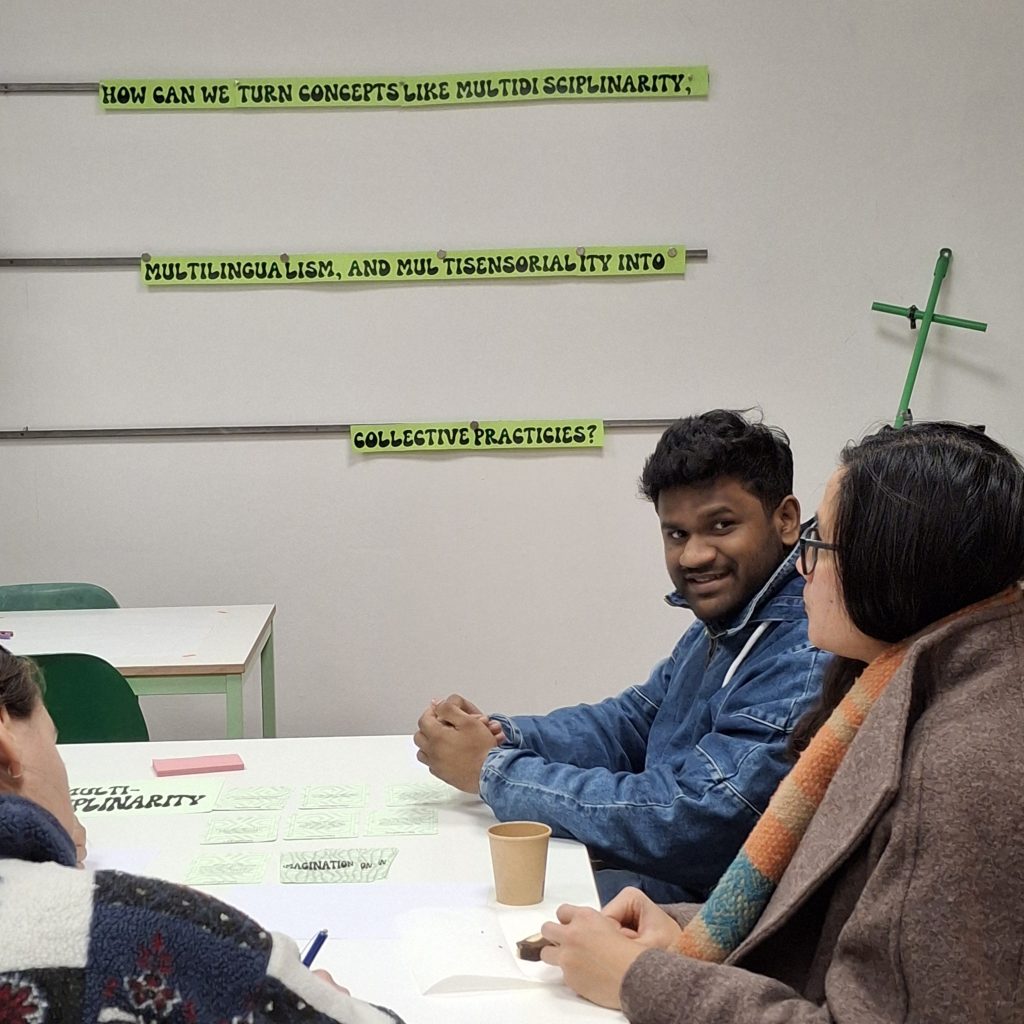
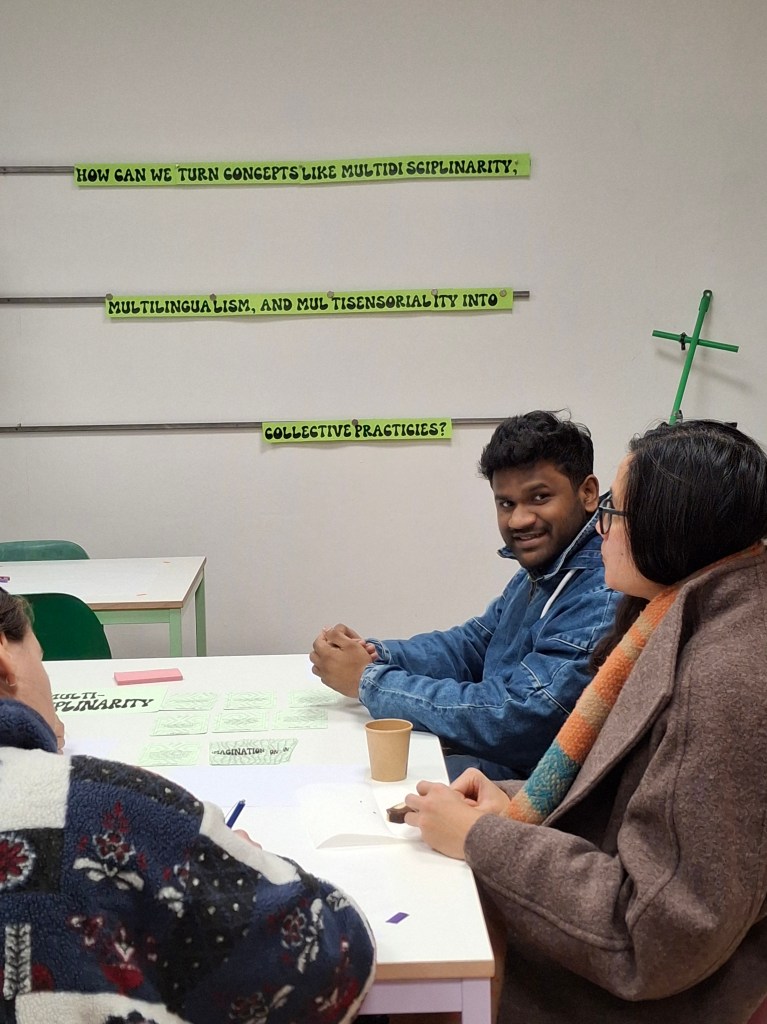
We left our own board at home2. In its place, one long question ran the length of the wall – how can we turn concepts like multidisciplinarity, multilinguality, and multisensoriality into collective practices? – printed large enough to read from the welcoming zone as well as the discussion tables, and left up there the whole day. We pointed back to it more than once, less as decoration than as a way of reminding ourselves, mid-conversation, what we were actually there to work out.
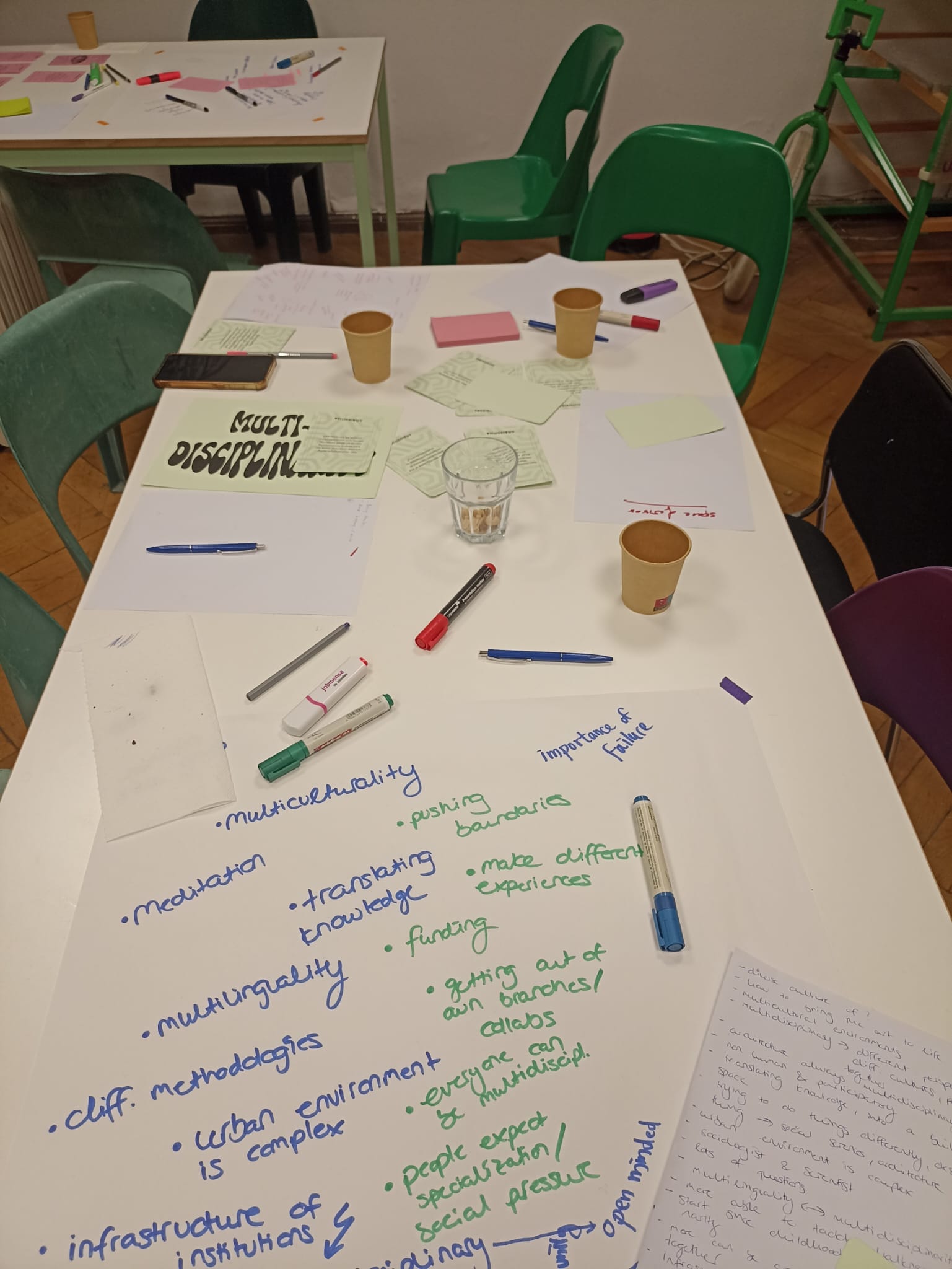
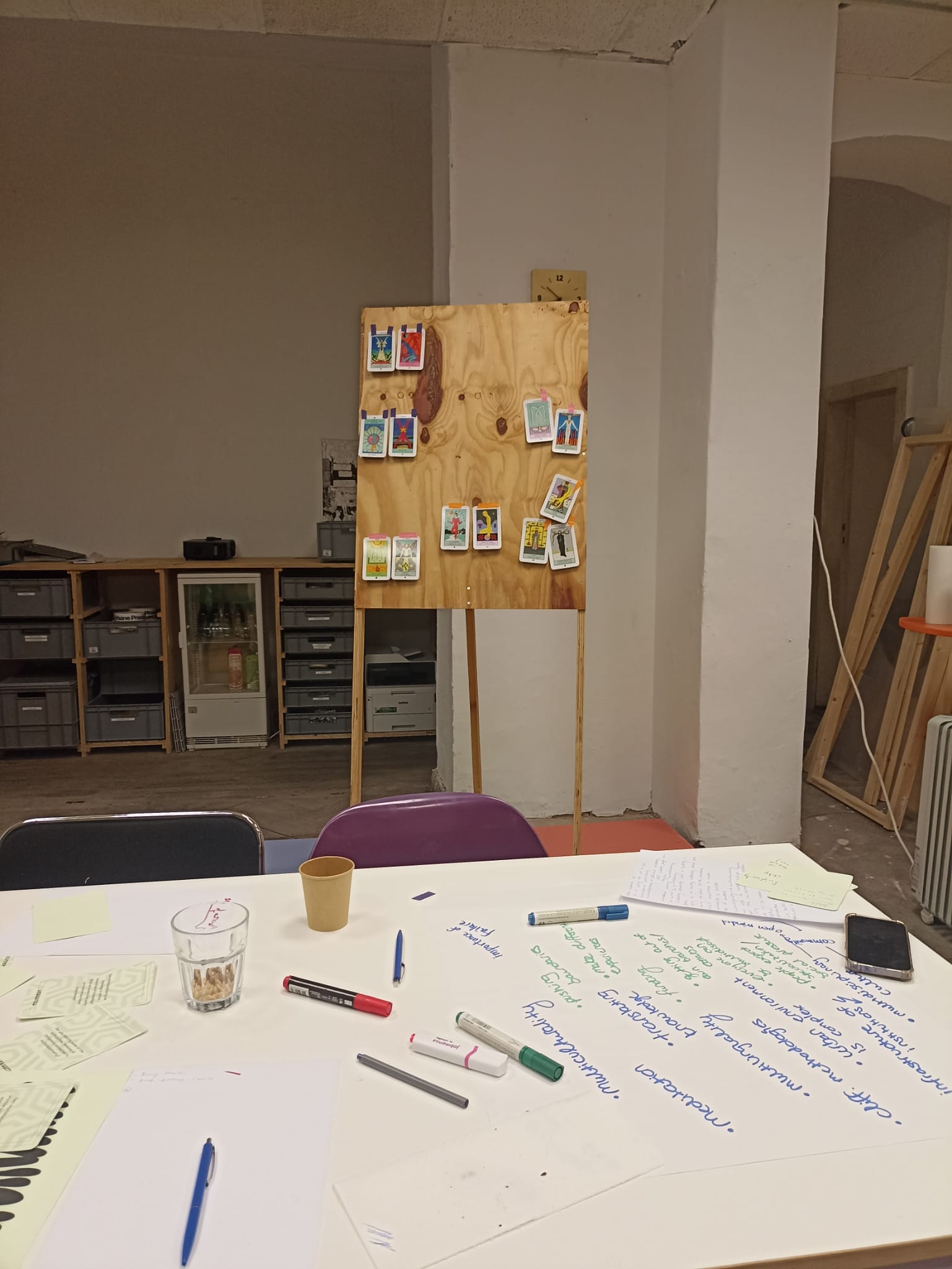
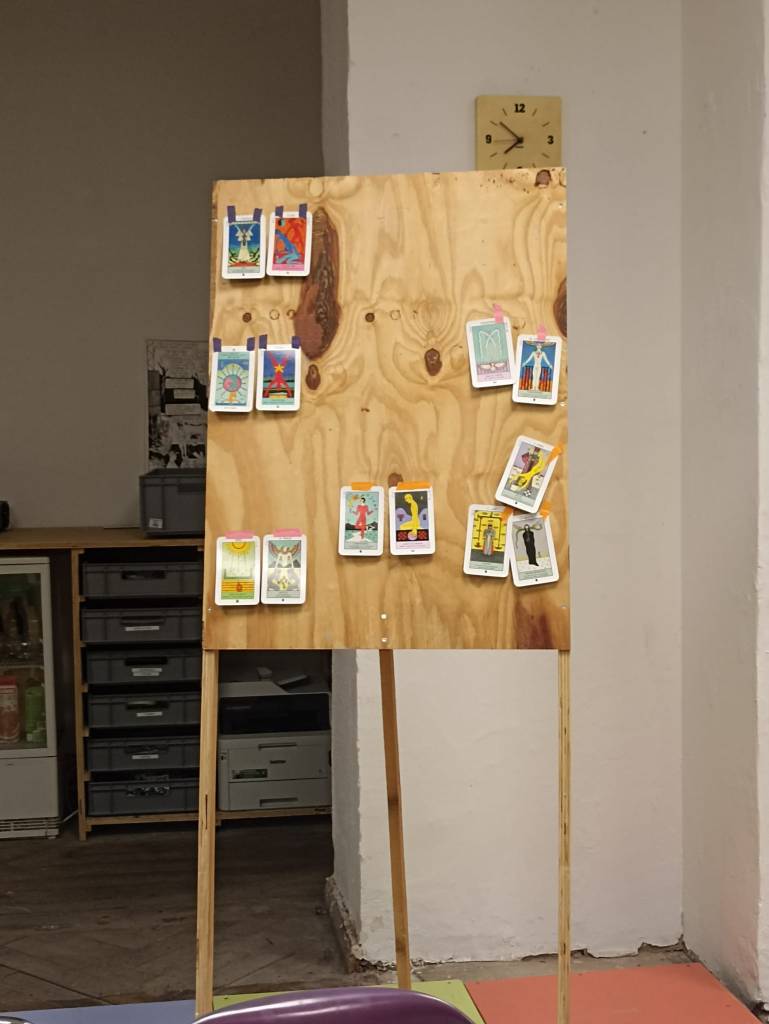
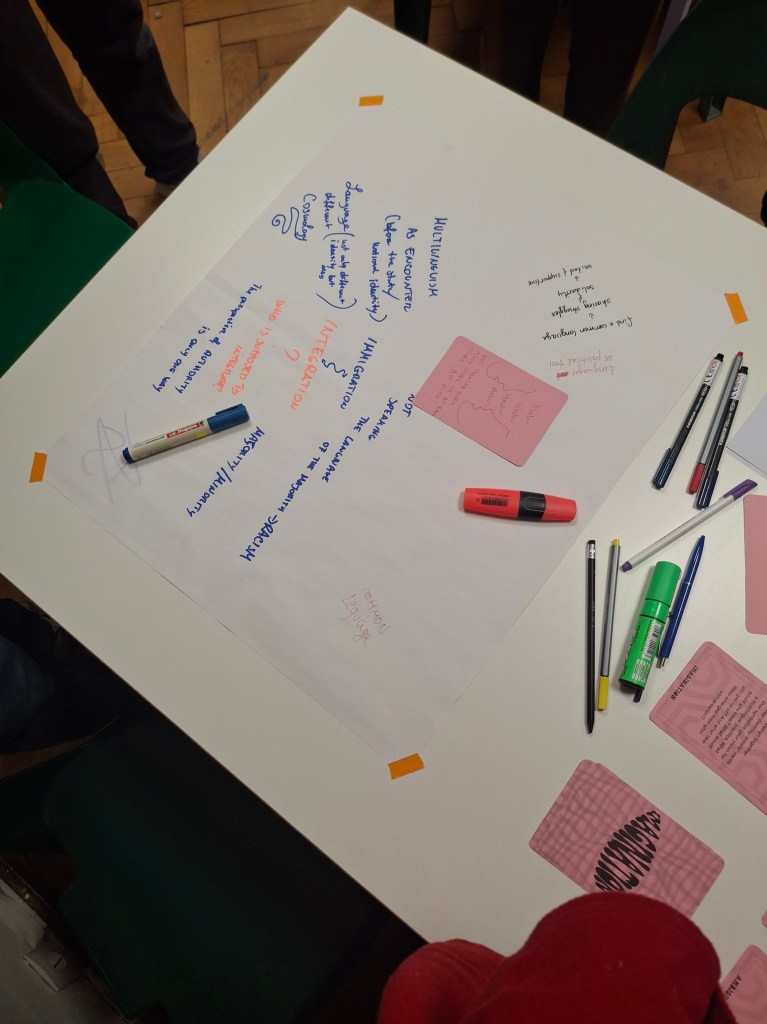
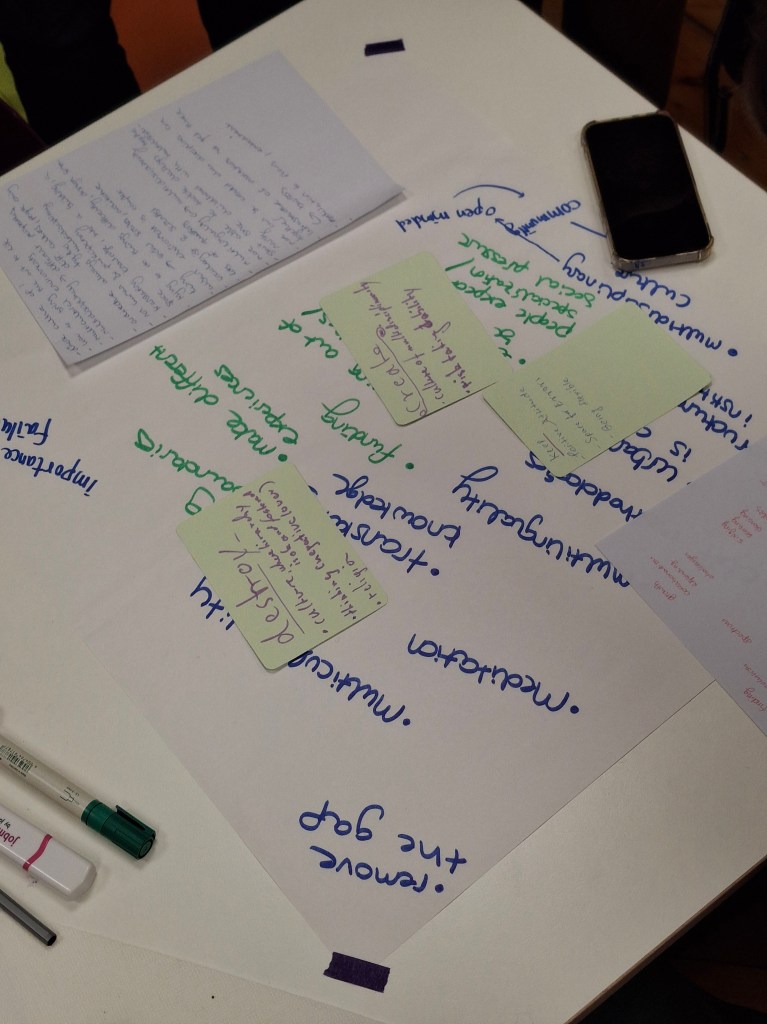
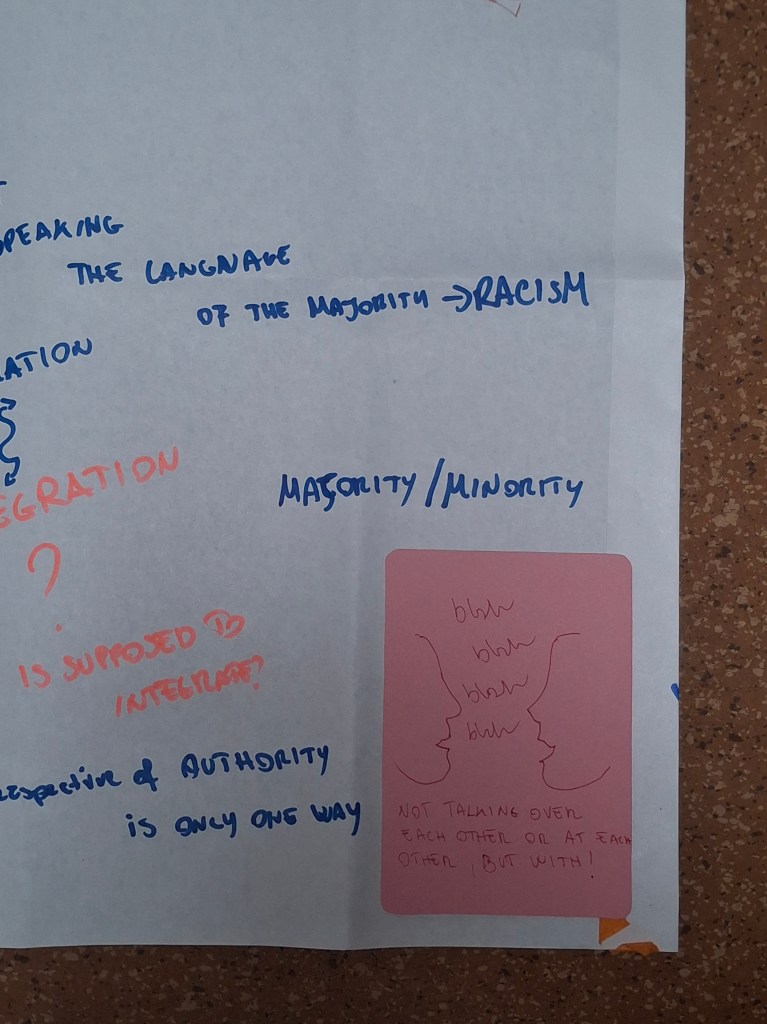
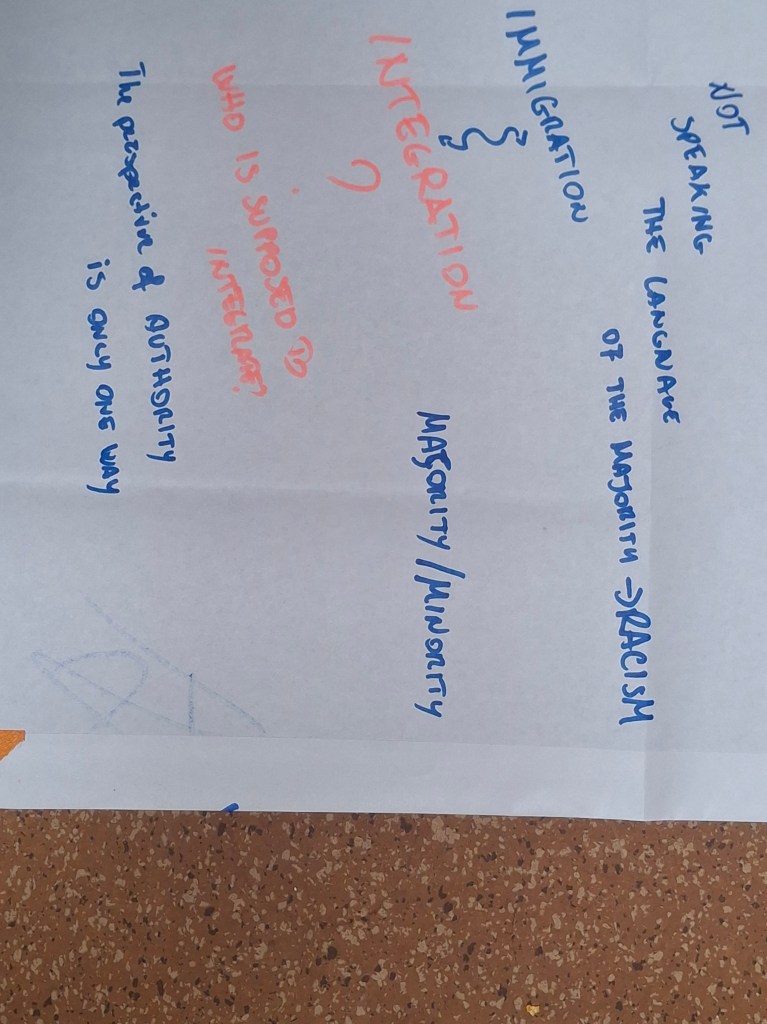
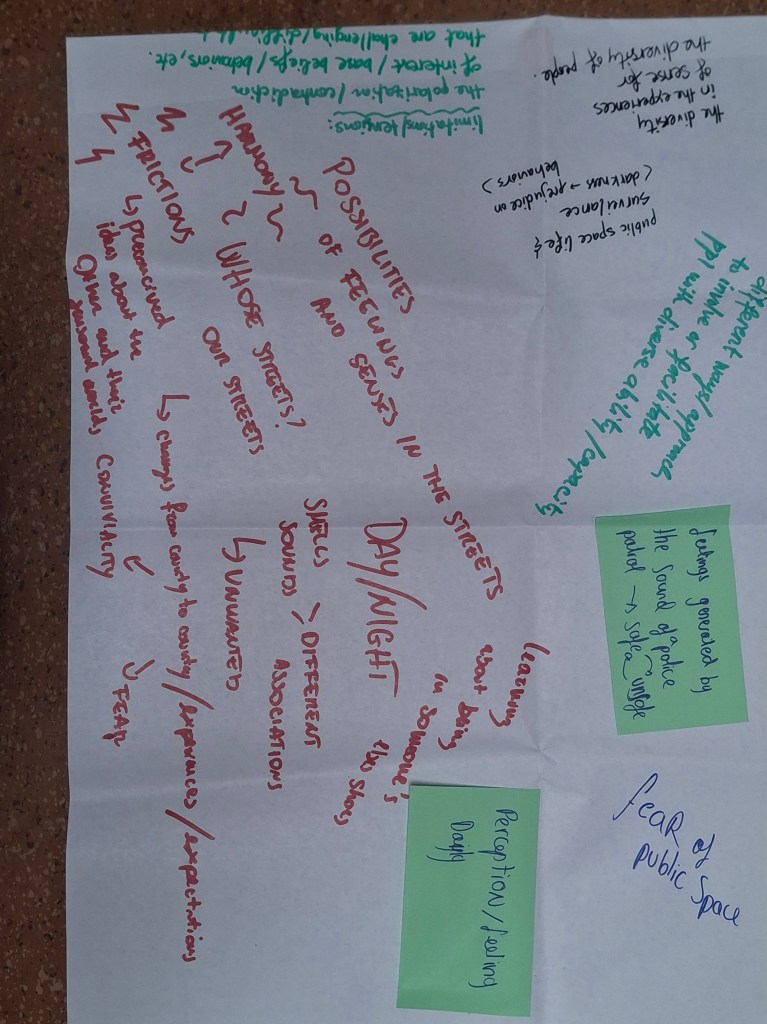
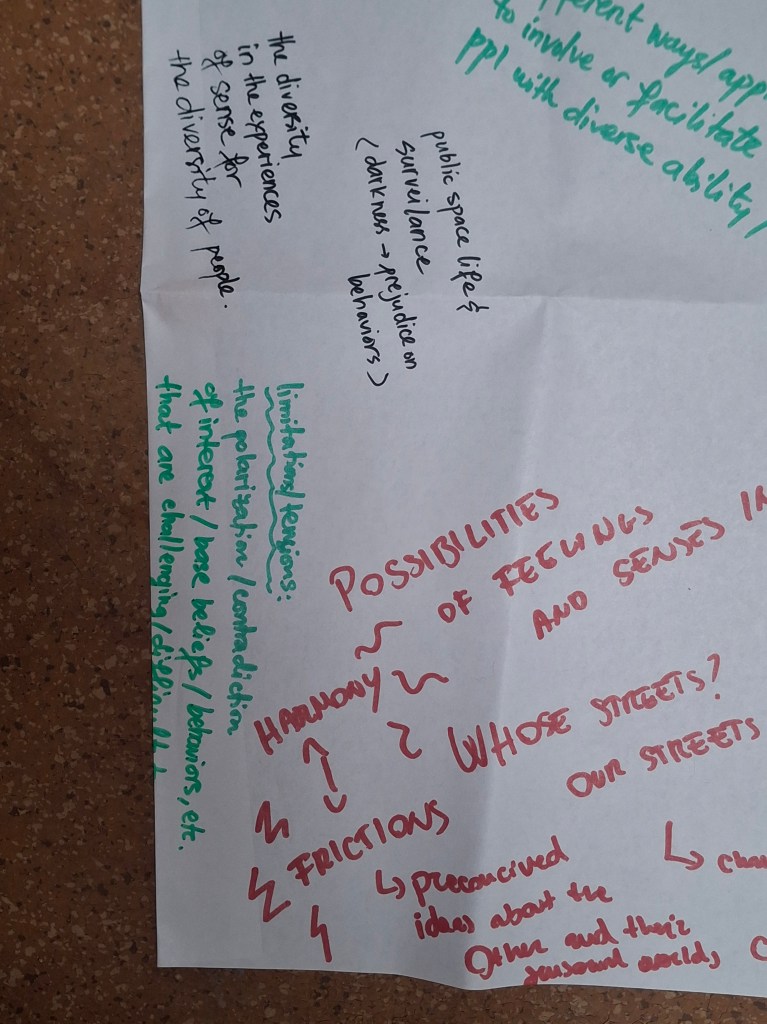
Our own board usually does two jobs, not one. Beside recognition, it also gives the process a place to be seen, somewhere thinking-in-progress can sit rather than just get talked about and forgotten. Here we split that second job across two different surfaces instead: an office board, borrowed for the icebreaker, where each tarot card was pinned up the moment it was shared; and, once the day moved into discussion, the large sheets of paper spread across the three tables, one per topic, alongside pens, question cards, and blank cards waiting to be filled, later hung on the wall for the whole room to read.
how the day was meant to move
We opened with introductions built around tarot cards rather than titles. Each person picked one to three cards that made them think of their Kiez, what they loved or feared or wished for in it, any experience at all, and told us what the card meant to them, no obligation to say what they did for work, where they studied, or where they were from.3 We hung each card on the board as it was shared.
From there, we introduced the project and the three topics, using prompts still shaped by the same tarot logic – possibility, ambiguity, imagination – to carry the icebreaker’s spirit into the more theoretical part of the day.
Participants moved to whichever table pulled them, worked through the discussion at their own pace with timers only to keep everyone loosely oriented, and closed by hanging their sheet and laying down their cards. After a break for snacks and looking at what was on the walls, the groups came back together to read each other’s cards — informally, intuitively, without needing to have sat at that table themselves.
what we leaned on, what we risked
Based on our observations from previous actions, we designed the icebreaker to provide a balance in a room of strangers: enough open space for each person to have their own voice, but also something to grab onto so that this openness is not left unused. The tarot cards were that something: a familiar tool that we repurposed here as a handhold. We also knew that not everyone wants to stand up in front of people they don’t know and talk about themselves, especially within a fixed structure of name, pronouns, work and where you’re from. This is why we asked a single question that pulled everyone straight into our topic – the Kiez – and allowed each person to decide how much of themselves to reveal.
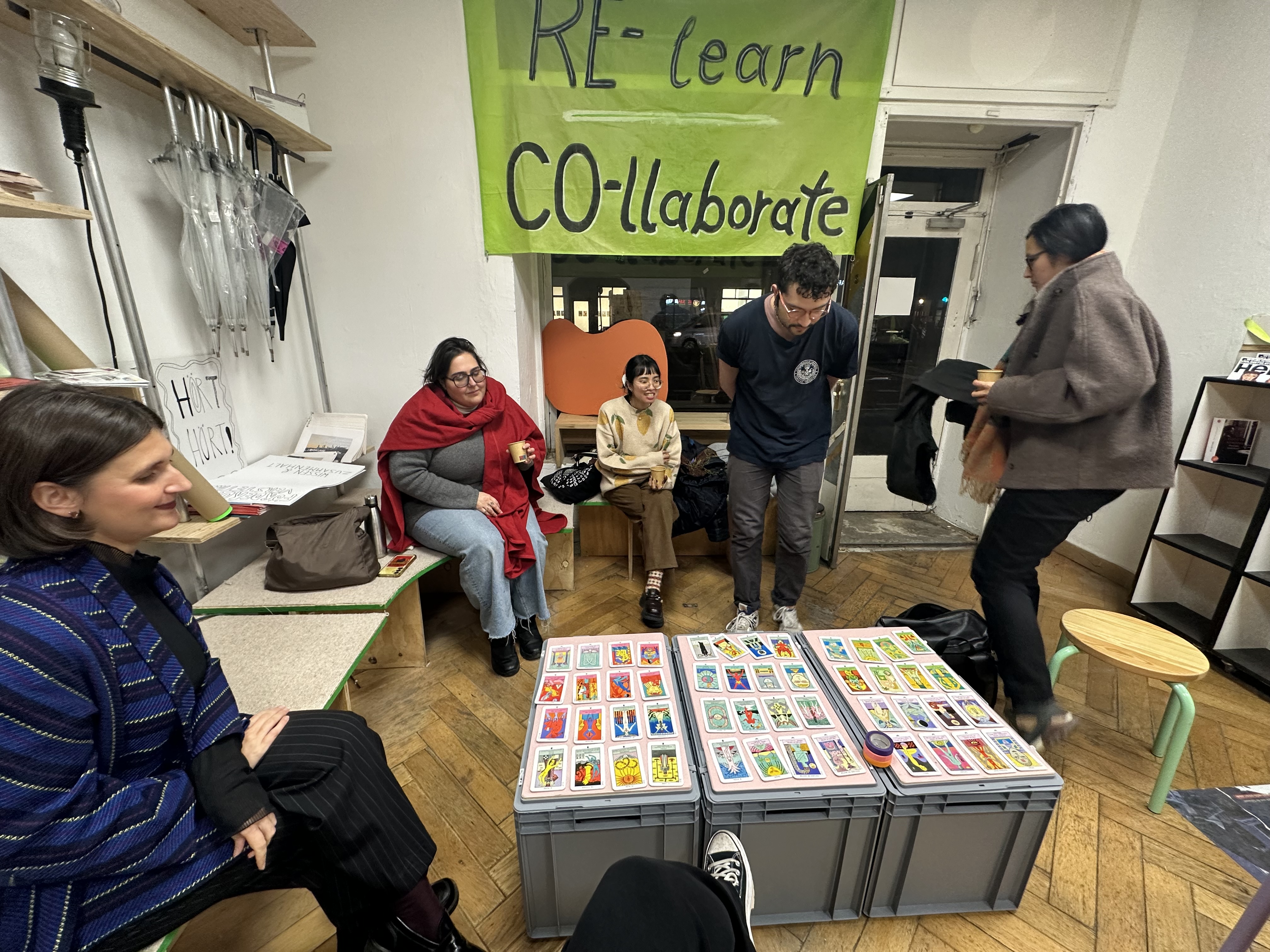
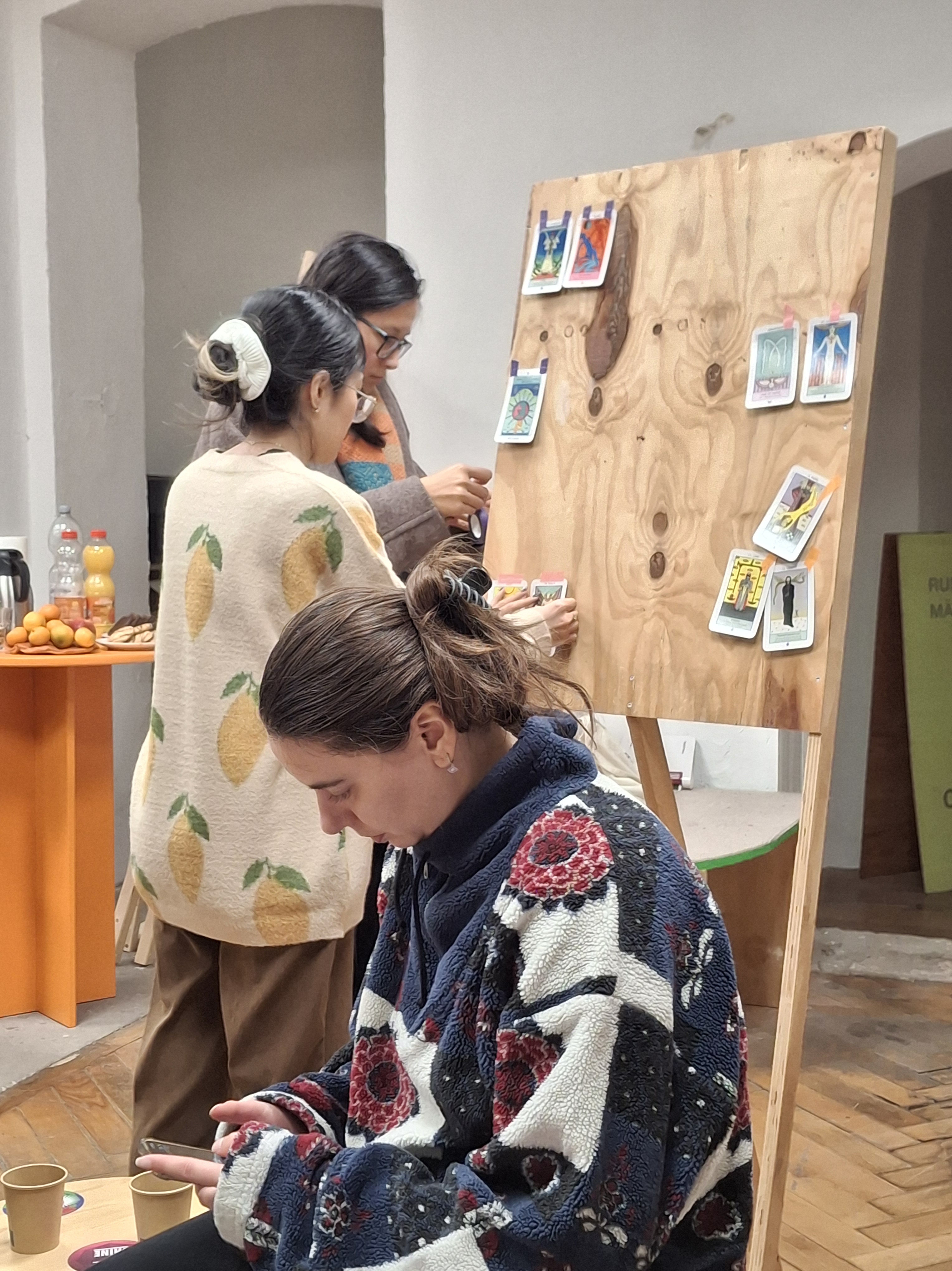
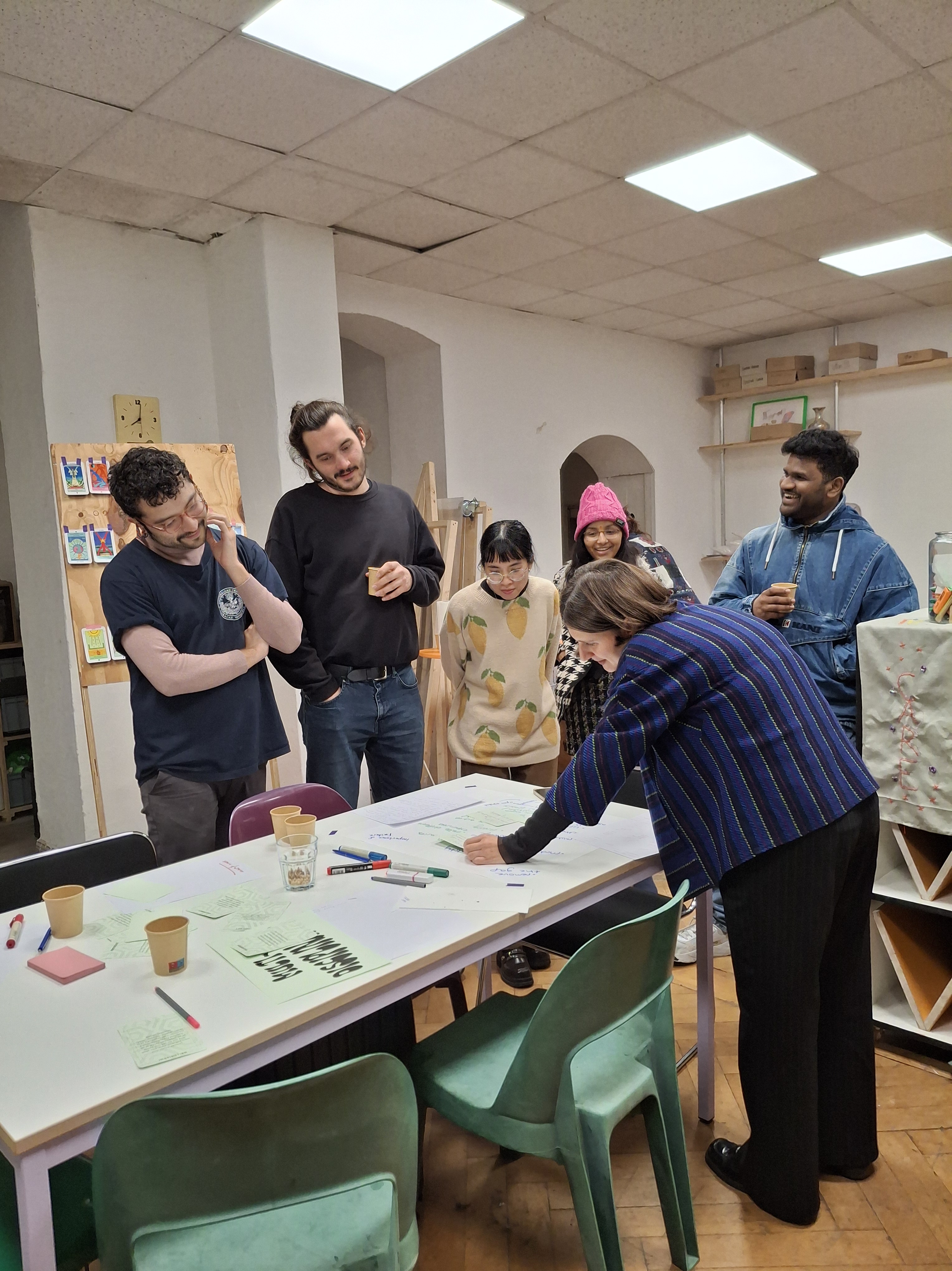
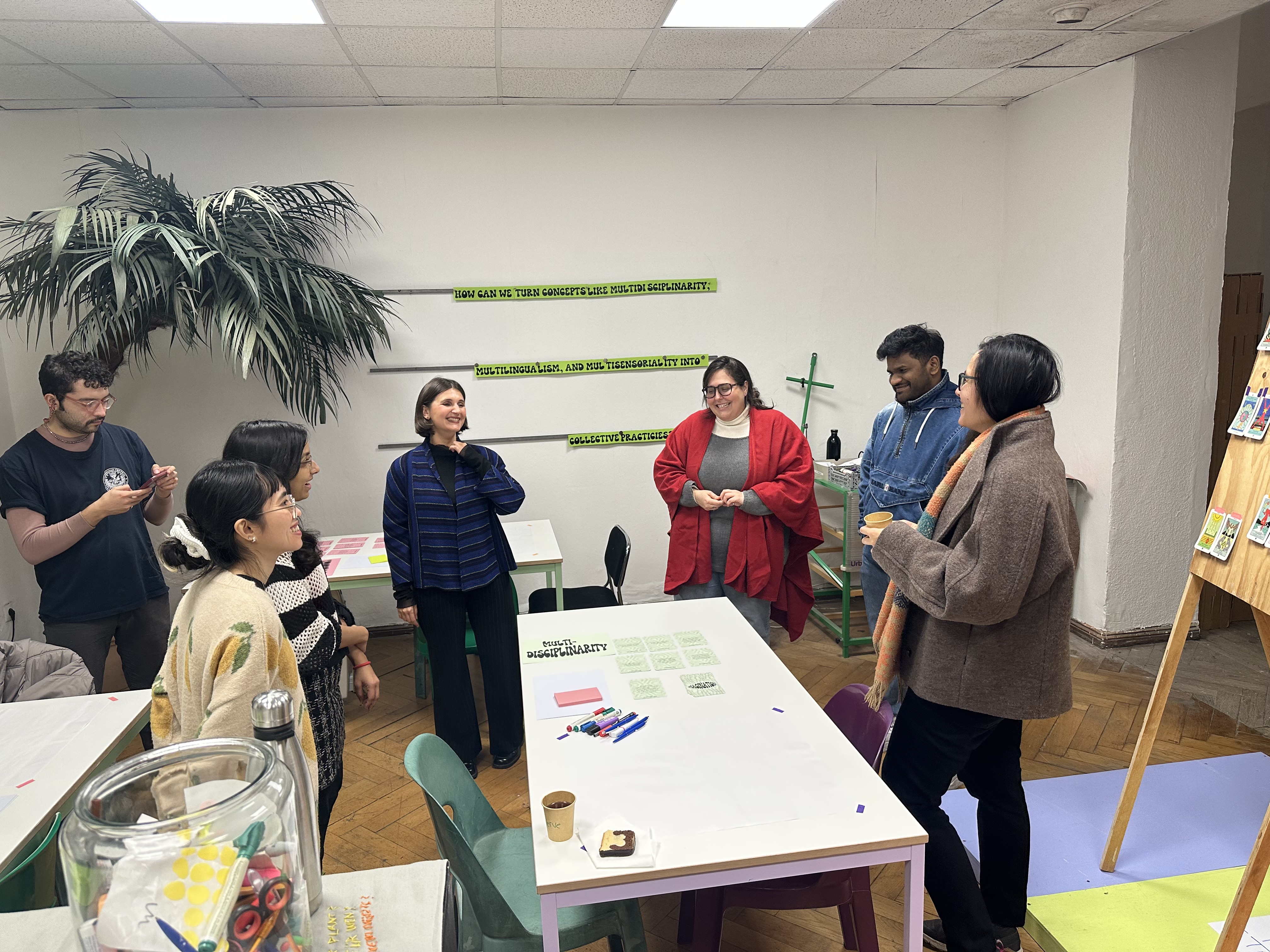
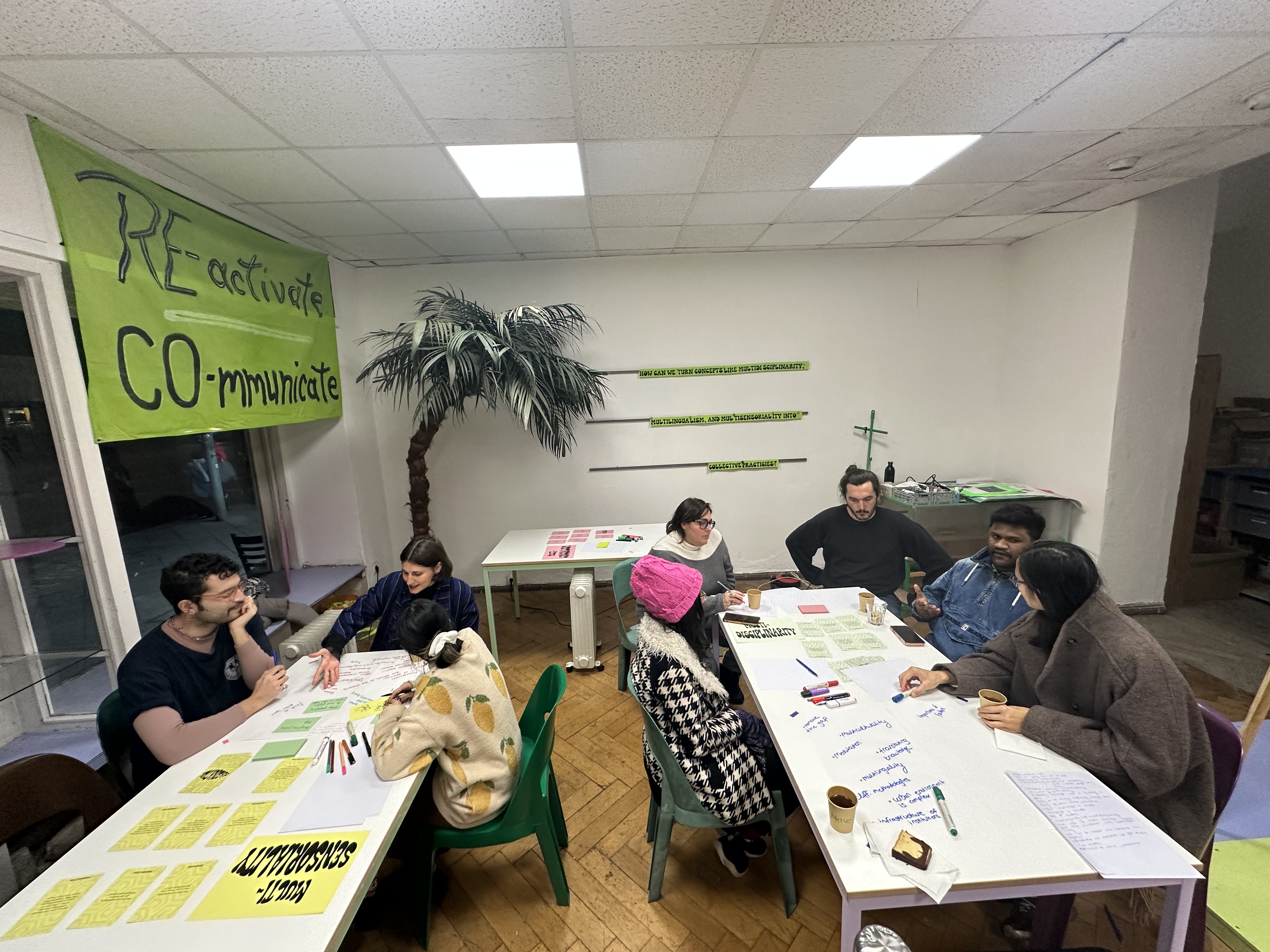
There are two things we risked, and both can be traced back to the same source: opening up a conversation that would usually stay between the two of us. At first, designing an action for practitioners4 felt strange, almost contradictory: at the Straßenfest, we had worked hard to unprofessionalise ourselves, and now we were building something for people who might interpret every choice as a professional one. However, we chose to treat it as an opportunity to further open up our process rather than as a peer review, which helped. In the end, the room was filled with a diverse group of people, including practitioners (some of whom had even run Open Office Dialogues of their own), individuals from the fields of planning and culture, as well as others who were simply curious about art, participation, or the multifaceted world we had been exploring. Choosing to participate in the discussion meant staying open to new ideas and hearing things we hadn’t thought of, though it wasn’t always easy to resist guiding the conversation back to our preconceived answers. We’re glad we resisted.
what the day actually did
Fewer people came than we’d planned for, and a few arrived late. We didn’t force either into the shape of the plan: latecomers were folded in wherever the room was, told what they’d missed, and, if they wanted, picked their tarot card during the break instead of at the start.
We’d expected something closer to an even split across the three tables. Instead, multidisciplinarity pulled the biggest, most invested group, and they stayed there the whole time, wandering further into their own tangents than we’d scoped for. Rather than redirect them back to the table’s original question, we let them keep going.5 A smaller group moved between multisensoriality and multilinguality instead.
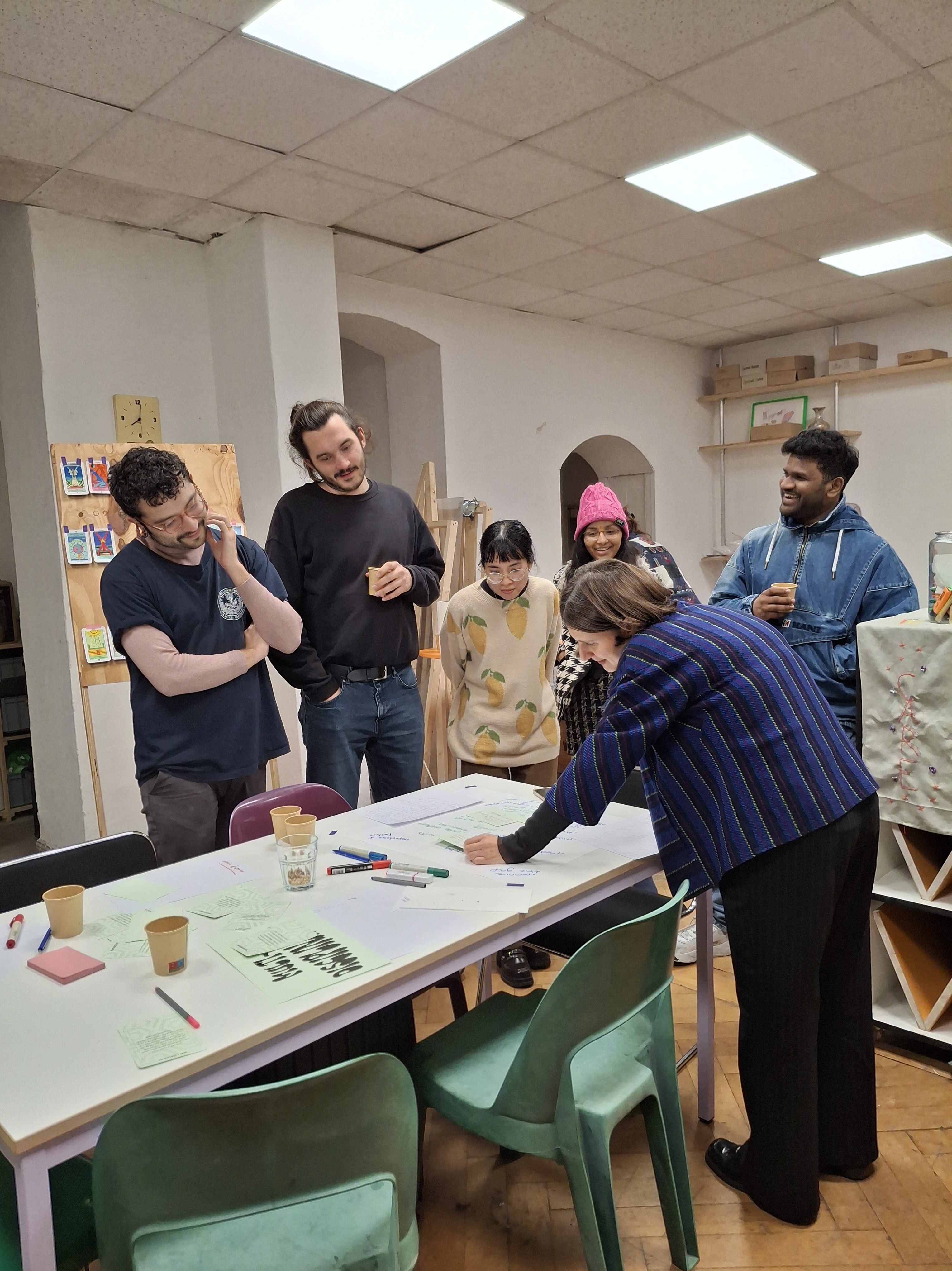
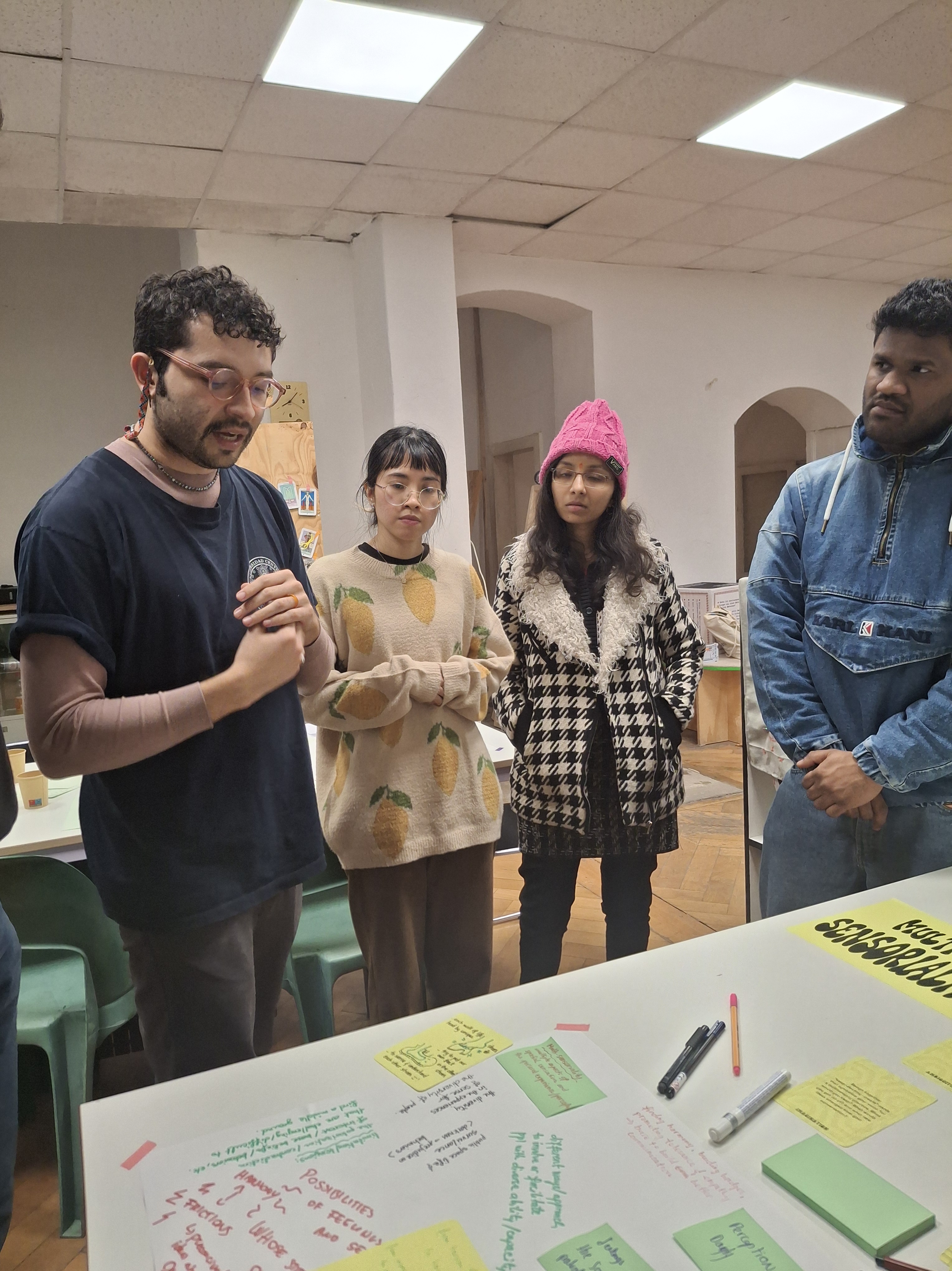
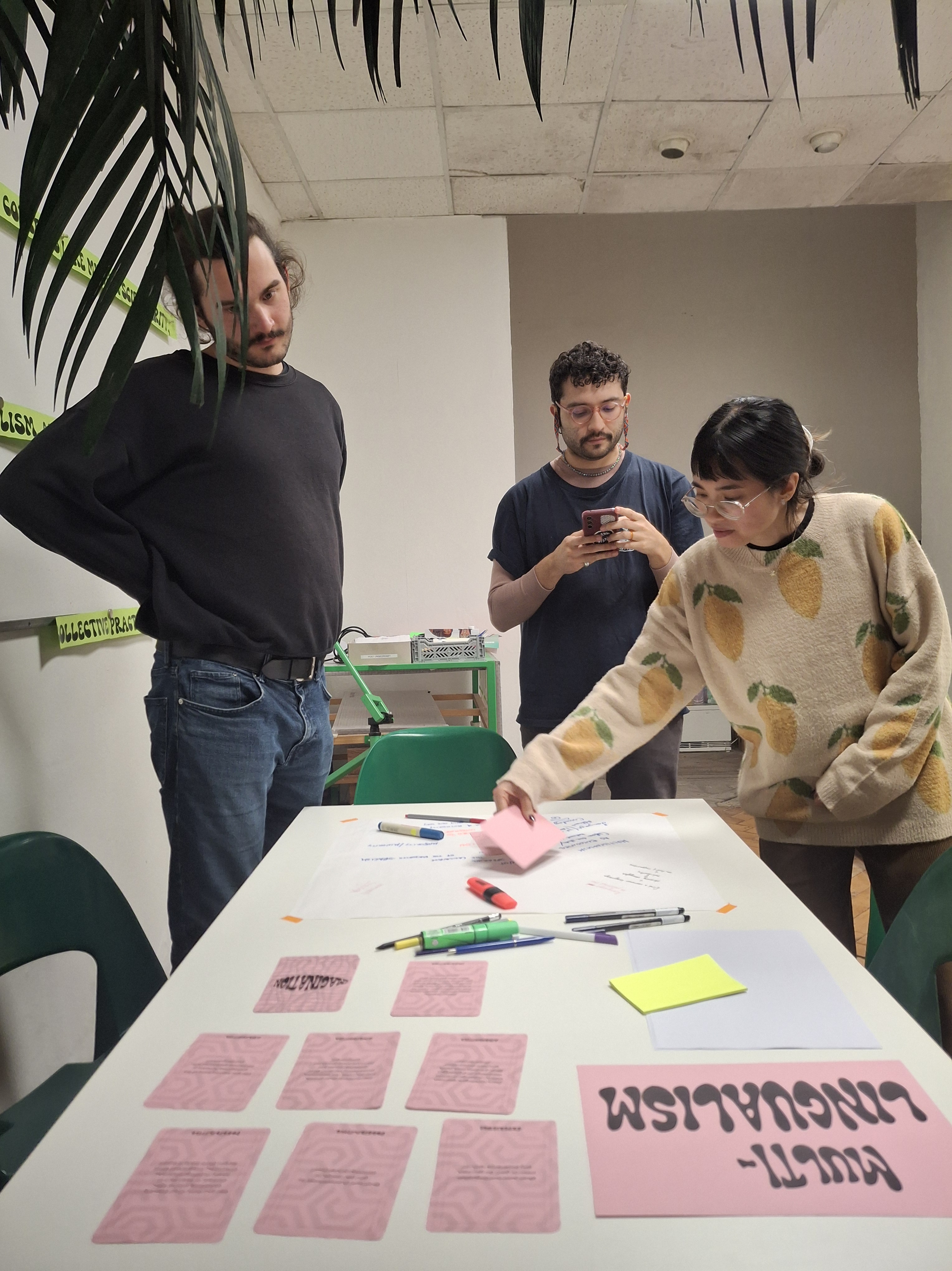
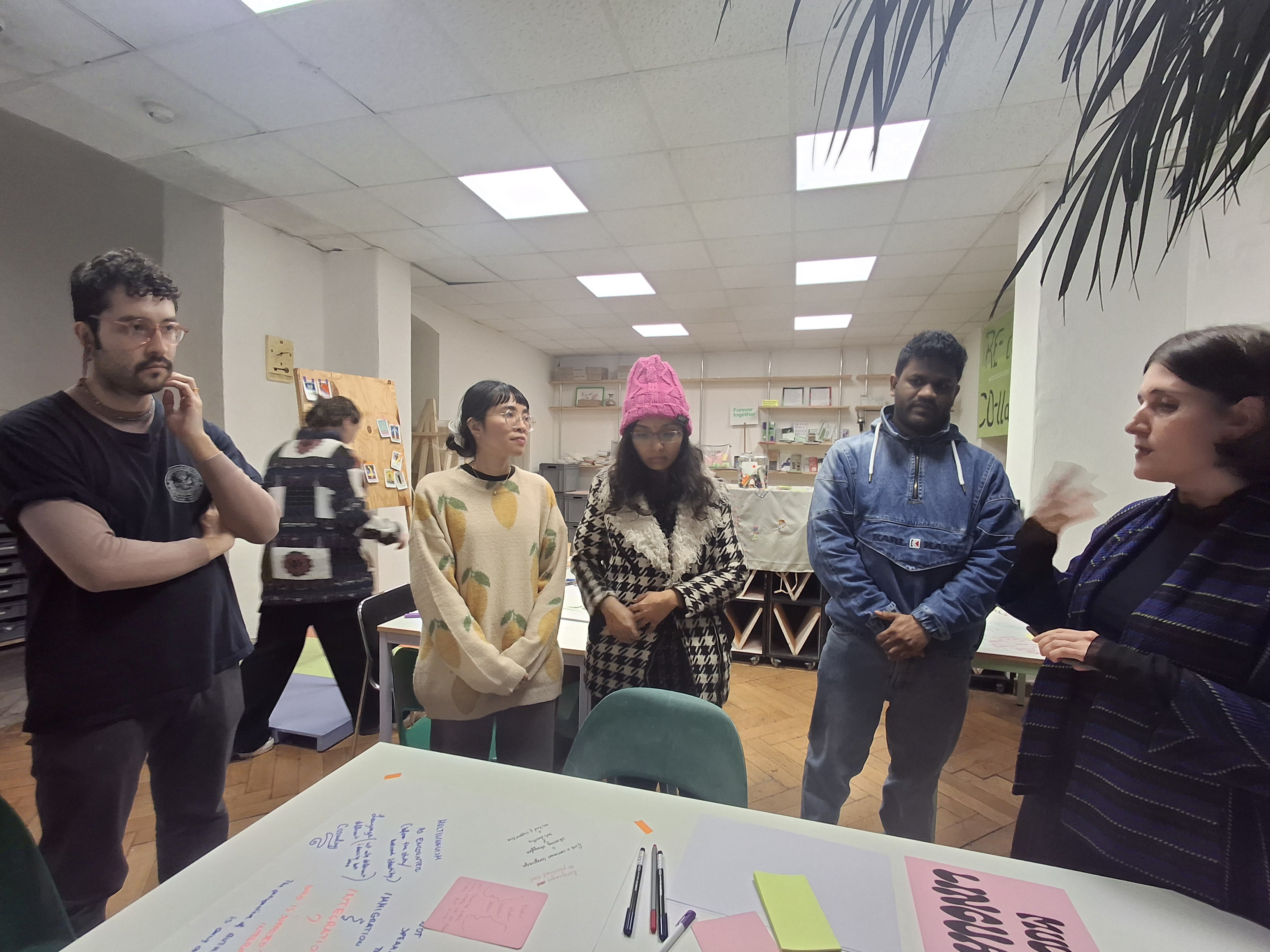
Language settled itself the way it had at Straßenfest: we asked, the room chose English, and we stayed ready to switch to German if it had gone the other way. It didn’t.
By the end, each table had produced its own small deck – question cards paired with the group’s own destroy/rebuild/invent cards – and the sheets underneath them held the scribbled, communal thinking that got them there.
check out the foto documentation of the workshop!
- our subtitle for the day, and also the title Urbane Praxis used in their public listing for the Open Office Dialogues series. ↩︎
- see the Straßenfest entry: that board was built for mobility across outdoor actions, which made it the wrong tool for a small, already-furnished office. ↩︎
- an abstract, identity-free way in, deliberately. For a few hours, we wanted to build our own small world rather than the usual first-meeting one built out of job titles and hometowns. ↩︎
- this action was designed to address the audience of Urbane Praxis e.V., which consists mainly of people involved in the fields of culture, urban design, politics, and planning.
In the end, a diverse audience with mixed professional and personal experience of the creative and cultural world and participatory formats showed up. ↩︎ - the same instinct as resisting the pull to steer the discussion earlier in the day: another instance of letting the plan bend rather than forcing it through, worth folding into that eventual entry on improvisation vs. structure across our actions. ↩︎
 KIEZWERKSTATT